

4th International Conference on Carbon Dioxide Removal (ICCDR)
Insight Papers
16 September 2026
Citation: IEAGHG, “4th International Conference on Carbon Dioxide Removal (ICCDR)”, 2026-IP04, September 2026, doi.org/10.62849/2026-IP04.
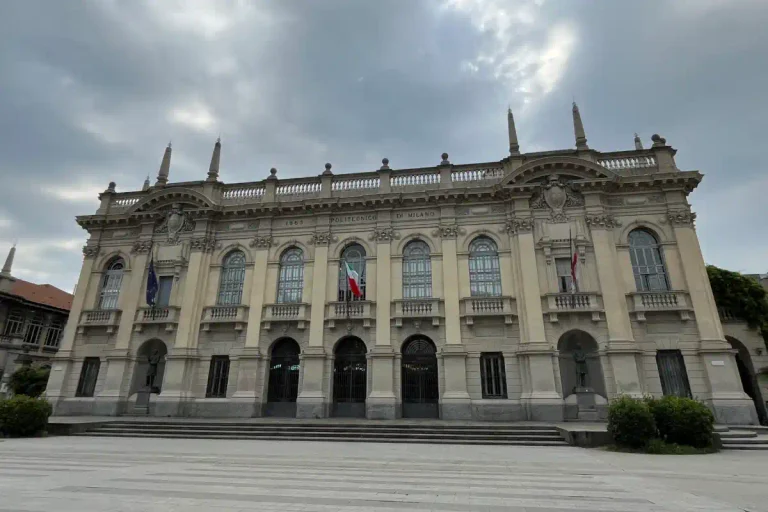
The 4th International Conference on Carbon Dioxide Removal (ICCDR) took place from 10th to 12th June 2026 at Politecnico di Milano, Italy. The conference was hosted by CMCC Foundation (co-ordinator of the UPTAKE project) and Politecnico di Milano.
IEAGHG attended the conference (MennatAllah Labib virtually and Jasmin Kemper in person), is sitting on the Scientific Committee (Jasmin Kemper) and acted as a judge for the poster awards (Jasmin Kemper).
The following Insight Paper provides brief summaries of the different themes that were presented and discussed at the conference without claiming completeness.
Welcome session
Massimo Tavoni (Politecnico di Milano, CMCC Foundation) welcomed attendees and opened the conference. He mentioned the recent inauguration of the POLICAP mobile CDR plant in Piacenza1. The facility is designed to test CO2 capture via solvent absorption directly at industrial sites, as well as new materials, components and processes that deliver improved performance from a technical, economic, energy and environmental perspective. With regard to CDR in general, Massimo posed the question of whether CDR is moving from hypothesis to necessity or vice versa. In any case, it will be crucial to develop a CDR strategy that serves society well.
Morgan Edwards (University of Wisconsin-Madison) presented the key messages from the 3rd edition of the State of CDR Report2. The report now has new chapters/sections on costs and potentials, assessment model scenarios, and a G20 policy database. Scaling of CDR needs to be fast but is not unprecedented, e.g. compared to electric vehicles (EVs), solar photovoltaics (PV), or ammonia. Thus, the next five years will be critical, especially for novel CDR methods. Good news on this front is the ever-increasing rate of CDR papers being published, now exceeding the rate of general carbon capture and storage (CCS) papers. Germany has taken the step to establish a new CDR unit in the federal ministry, with quantified targets for novel CDR being expected soon. Biochar (BC) research in China is big, but Morgan noted that this time, there were no research groups from China present at the conference, similar to other countries from the Global South, so improved RD&D cooperation is needed. In tune with Massimo, Morgan highlighted the importance of CDR as a public good.
Fundamental Science & Technology
One topic that was presented and discussed in this conference theme was ocean iron fertilisation (OIF). There are several remaining questions in OIF R&D, including: 1) How much carbon has to reach a certain depth to be considered sequestered for more than 100 years?; 2) Is OIF effective, durable, scalable and reproducible?; 3) How to MRV (monitoring, reporting and verification) the ocean?; and 4) What are the ecosystem impacts of OIF? OIF has a potential scale of up to 4 billion tCO2/yr at an estimated cost of 50 $/tCO2 or below. There have been 13 OIF field trials so far, with the aim of addressing areas of concern, such as harmful algal blooms, deoxygenation, non-CO2 greenhouse gases (GHGs) and nutrient robbing.
On ocean alkalinity enhancement (OAE), presentations highlighted that its performance depends on where and what you use and that the core uncertainties are dissolution and precipitation behaviour of different feedstocks in different ocean settings. E. g., research found that NaHCO3 is relatively robust, Ca(OH)2 is temperature sensitive and Mg(OH)2 is salinity sensitive. Several projects are now testing the environmental safety and the CDR efficiency of OAE, including KOSMOS GEOMAR3, RETAKE4, ALK-ALIGN5 and SeaO2CDR6. Presentations on OAE also explored the carbon intensity of the different feedstock options and explored ways to decarbonise the production process of feedstocks such as Na2CO3, such as the Limenet process.7
Another offtake option that was discussed is concrete carbon mixing where CO2 is injected into concrete during the mixing of fresh material.8 This enhances material performance while simultaneously permanently storing CO2. It is important to note, however, that the amounts of CO2 used in the process are small (a few kilograms per cubic metre of cement).
Research on Direct Air Capture (DAC) had a strong presence at the conference, in fact it was the most presented technology at the conference. Presentations on solid sorbent-based DAC included quantifying carbonation efficiency dependence on geographic location9, preliminary air contactor sizing10, and contactor design11 for CaOH as a sorbent. CaOH is a capture medium of interest because it is readily available and has a relatively low cost. Other sorbents considered for solid-based DAC include SrO because it has high CO2 selectivity, fast uptake kinetics, and a tolerance to H2O and other contaminants. Novel sorbents produced from food waste, like Whey-PEI-Aminosilane-W-P-A, were also discussed. Experimental results found that proteins can be utilised to produce DAC sorbents, functionalisation with two types of amines allows the sorbent to maintain high stability and high uptake, and humidity is necessary for the performance of the protein sorbents. Food waste is an interesting source for sorbents given 1/3rd of all produced food is wasted, accounting for 8-10% of all greenhouse gas emissions.12
Novel air contactors for the process intensification of DAC were also discussed, including hollow fibre membrane contactor in a cross-flow configuration using KOH as a solvent. The hollow membrane contactor was found to have comparable performance to benchmark liquid contactors with a reduced risk of solvent entrainment and solvent contamination. Other developments to DAC process that were discussed included sorbent regeneration via direct heating using condensing saturated steam.13 It was found that direct heating achieved desorption approximately 6 times faster and reduced exergy demand by 50% when compared to indirect heating.
Some presentations explored the synergies between mineralisation and DAC.14 Holistic approaches to evaluating CDR solutions and exploring synergies between CDR solutions can help prioritise technology development strategies and drive down the overall cost of CDR. Other multi-CDR solutions that were explored included projects such as the ABBS project (Afforestation, BECCS and Biochar Synergy)15, which is a project that explored the mass and energy integration of BECCS, biochar and afforestation. Multi-CDR approaches are of importance because a mix of CDR methods is needed to achieve net greenhouse gas neutrality by 2045.
Measurement, Reporting & Verification (MRV)
Systematic evaluations of the scientific literature and certification methodologies for MRV of CDR have shown that significant literature gaps exist for the reporting and verification aspects.
The IPCC Tier 1 method for soil organic carbon sequestration (SOCS) is widely used and popular but considered not very accurate, as it relies on default factors, but SOCS is very site-specific. There haven’t been a lot of developments or updates over time, with 75% of studies having been published before 2010. This raises questions whether the method is still ‘fit-for-purpose’.
Similar questions exist for the tracking of land-based activities in national greenhouse gas inventories (NGHGI) and nationally determined contributions (NDCs). The CDR definition used in IPCC excludes indirect effects, but for land-based activities those cannot be easily distinguished from direct effects. The upcoming IPCC 2027 Methodology Report can help address some of the issues in this area, e.g. establishing if there are any gaps in the IPCC Guidelines, if CDR is sufficiently significant to be included, and if the estimates can be verified.
Policy, Governance, Economics & Upscaling
Under this theme, the management of carbon and the allocation of related risks were discussed. CCS-based CDR value chains require layered contracts. More than 300 risks are currently known, including e.g. commissioning delays, stranded assets, CO2 leakage, CO2 specifications and network underutilisation. As remaining issues to be resolved, the limits of private contracts, the role of state support and the potential inherent incompatibility of technology and legal systems were mentioned. Climate-aligned contracts need to consider flexibility and realism in hubs, clear custody and MRV, predictability and bankability, transparent charging, governance, and cross-border operability. Due to the opacity and nascency of industry data leading to underdeveloped analysis and best practices, a principles-based approach will likely be needed.
With regards to regionally integrated assessments of OAE, one study found that in the Norwegian exclusive economic zone (EEZ), the gross removal potential for OAE in 2050 is at least 60 MtCO2, with break-even prices of 250-300 $/tCO2. Thus, OAE could become part of Norway’s CDR portfolio, but a stronger carbon price signal is needed.
This decade will be decisive for direct air capture (DAC) deployment but is also increasingly defined by uncertainty, making resilience a required element. Another issue is the current lack of diversity with only a few major technology providers: three DAC companies (i.e. 1.5, Heirloom and Climeworks) sell 90-95% of credits. Similarly, there are only a few major companies on the buyers’ side (i.e. Microsoft, Airbus and Amazon).
The presentations and discussions also highlighted the currently existing ‘CDR gap’ in countries’ pledges, which fall short of IPCC pathways. This was described as ‘net zero myopia’, as countries were aiming for net zero, not the wider goals of the Paris Agreement. It will be important to define and agree on common but differentiated responsibilities and sufficient amounts of CDR quickly, as a looming overshoot is already decoupling CDR from residual emissions.
CDR Policy and Governance Panel
Part of the discussion in this panel centred around the question whether CDR policy and governance are a brownfield issue, rather than a greenfield issue. An alternate view emerged that they could be rather seen as a retrofit issue. It will be essential to find opportunities to embed CDR into existing processes and infrastructure, then match those with relevant policies and regulations that already govern the sector or activity, and finally measure and quantify the CDR. In this context, the question arises who should shoulder the administrative burden for MRV of CDR, and the answer, at least from a European perspective, that it needs to be a shared one. It was further mentioned that we are currently not doing CDR for our inventories/ledgers, aa the amounts are far too small, we are doing it to learn, drive down the costs and address technical teething problems for novel CDR.
Another item of conversation was the significant CDR potential of lime recarbonation. In this context, the IPCC update on enhanced carbonation was welcomed, but the IPCC now also needs to work out its stance on the recognition of lime recarbonation. In a wider sense, this includes ensuring competitiveness, which is a challenge considering the long development timelines for MRV methods. Clarification of IPCC definitions and terminology, e.g. durable vs permanent, was acknowledged as challenging but necessary for the clear communication of CDR.
Some of the other topics discussed included: carbon intensity (CI) standards and mandates (e.g. setting standards that are only achievable if CDR is used; avoiding the softening or removal of mandates), artificial intelligence (AI) use in CDR (e.g. this will not solve problems on its own but can help in certain areas or with specific research questions), and the role of the Global South (e.g. some CDR option, like DAC, might work better there).
Justice, Ethics & Social Perceptions of CDR
Public support for novel CDR hinges on procedural and distributive fairness. Thus, engaging early on, transparency and scrutiny, and taking fairness issues seriously are all important. A lack of fairness cannot be compensated by technical-economic performance. A study analysing how CDR stakeholders survey the public found that prescriptive messaging is consistently used and the majority of engagement activities address the “general public” as opposed to specific local stakeholders (with only one English language survey addressing indigenous stakeholders), with affected and non-Global North publics surveyed less often. The study also found that engagement tends to happen early, but are designed with a fixed agenda, i.e., participants rarely help set the terms of debate, instead of surveys where participants can question problem definitions, deployment pathways, ownership models, and governance conditions.
Most R&D on CDR, especially on economic benefits, has been done in and for the Global North. However, some studies on CDR in the Global South have found significant potential: 1.5 – 5 GtCO2/yr, 2 – 6.5m jobs, $182 – 605bn gross value added (GVA). In addition, CDR could bring benefits such as rural development and a reduction in spatial inequality. Several case studies, such as Bolivia (Exomed Green), Brazil (Net Zero), and Kenya (Octavia Carbon), are backing up the potential for job creation. However, a renewed mindset of extractivism could threaten those gains. The effective deployment of CDR on a global scale will require the optimisation of resource availability and suitability that would require trans-boundary and trans-regional collaboration because regions/countries with the highest [historical] emissions may lack the optimal geophysical conditions and resources to deploy CDR at the necessary scale.16 Even if regions with the higher “responsibility” than opportunity finance CDR in regions with lower “responsibility” but higher opportunity, this must be done in a way that does not result in a novel form of exploitation. In addition, framing around traditional CDR practices in the Global South are often not recognised as sophisticated technologies, resulting in recognitional injustice.
With regards to justice and equity in CDR frameworks, CDR could promote justice through climate stabilisation, emissions reductions and mitigation of climate impacts, but it might also exacerbate them or create new ones. In certain frameworks, such as in the EU, justice is present but in absence of strong MRV poorly operationalised and suffering from a fragmented architecture.
Research on the public perception of CDR in the UK has found that there is strong support for climate policy, including CDR, in general, but varies across technologies (e.g. peatland restoration is seen more positively, while DACCS is seen as less desirable) and regions. Field trials can help change perception, but they can also shape expectations and bring to light previously overlooked concerns. The findings show that in terms of governance, bottom-up approaches are preferred (with OAE governance causing more concern, while governance of DACCS caused less concern).
Another topic under this theme was the question of when CDR credits are considered a fair trade. For the commodification of CDR, the associated accounting needs to tick the following boxes: value internalisation, measurability, fungibility and internal as well as external commensurability. Making CDR transactions morally permissibly has to consider eligibility, boundaries, quantification, aggregation and issuance. Using default values can reduce the burden of quantification, however, the risk of mis-quantification and transference can compound during the estimation process. Further, the amortisation of carbon debts can create a temporal misalignment of CDR’s climate impacts. Ultimately, the question is not just ‘what choices are being made’ but also ‘who makes these choices’. In addition, CO2 counting compensation; where one CO2 molecule that is removed today is considered equal to one CO2 molecule that was emitted in the past, is a flawed approach because it does not account for the climactic impacts of the emitted CO2 molecule as compared to those of the removed CO2 molecule. When deploying CDR, timing matters a lot. Simplified linear climate models that model the climate impact of timing and the rate of legacy removals on surface and ocean temperatures find that the earlier, slow deployment of CDR is less damaging to the climate than later, faster deployment. The models also suggest that more CO2 may need to be removed than was originally emitted to help mitigate the long-term effects of delayed action.17
Physical and Socioeconomic Interactions of CDR and Climate Overshoot Panel
This panel summarised some of the findings and conclusions of three decades of research on overshoot. One key message is that some overshoot scenarios do return and some don’t. There are a lot of trade-offs of overshoot and return pathways, e.g. amount and timing of negative emissions/CDR, and the ‘competition’ between overshoot and residual emissions for CDR. In addition, there are intergenerational and distributional trade-offs, i.e. overshoot can shift decarbonisation efforts and costs in time and space and can increase climate hazards in some scenarios for both humans and the deployed technologies themselves. The climate risks from overshoot also include a potential prolonging of climate impacts in hotter and poorer countries, with any potential recovery depending on the persistence of the climate shock on the affected societies. Getting to net negative might require subsidies of more than $200/tCO2 sustained over several decades with payoffs only realised under strict climate policies, making this undertaking a huge commitment, i.e. the biggest Earth restoration project ever.
Other discussions centred around the cultural and social dimensions of peak and decline, highlighting that there seems to be sufficient global consensus that return from overshoot is worth the cost. However, cultural and social research on overshoot is still limited, with SOCS currently receiving the widest cultural register among CDR methods. Output from focus groups has shown that there are significant feasibility concerns regarding reaching net zero with CDR that go beyond the technical and/or economic dimensions, with CDR sometimes being regarded as something of a ‘fantasy’. Another issue sits with the choice or avoidance of a narrative. Even when a narrative is not offered, this will leave room for other actors to make up their own regardless, which in the worst case could end up in the formation of a conspiracy theory. Thus, the dangers in climate discourse need to be acknowledges and carefully considered. Some voices suggested that CDR should not be seen as a ‘trillion-dollar business’ but as a service to society, similar to the already existing solid and liquid waste treatment.
CDR Interactions: Mitigation & Adaptation
Under this conference theme, spatially explicit assessments of BC’s climate change mitigation potential were discussed. Results show that not all BC is created equal. Carbon price influences both scale and geography of BC deployment: higher carbon prices favour deployment in North America, while at lower carbon prices Asia experiences most of the deployment. Global mitigation potential is generally concentrated in agricultural regions, with optimal BC deployment strategies and agronomic and climate benefits varying strongly across regions. An important limitation here is that maximising mitigation efficiency per hectare does not automatically maximise global mitigation potential as well.
Another study investigated how temporary CDR (tCDR) should be valued and accounted for in climate policies, especially regarding its ability to offset short-lived climate forcers (SLCFs). It found a required compensation ratio of 101kg CO2 stored for over 100 years to offset 1kg CH4. As a general result, the criterion for ‘short-lived’ was defined as the ability of the cooling peak of tCDR to mask the warming peak of the target species.
GEOMAR’s Carbon Removal Atlas (CDRatlas18) aims to provide clear, accessible, and evidence-based CDR information for decision-makers in politics, actors within industry, and interested members of the broader public, and currently offers implementation guides for bioenergy with CCS (BECCS), OAE and mangrove forest (re-)establishment.
Removal of Non-CO2 Gases
CH4 contributes approximately 30% to global warming. With about 31%, livestock is the largest source of global CH4 emissions. CH4 removal is more feasible at higher concentrations, i.e. air has around 2 ppm, whereas barns/manure have 50 – 5000x more. Optimisation and modelling studies, such as the EU project REPAIR19, found that co-capture of CH4 and CO2 can lower the energy demand. Marginal removal cost curves show that most removal will likely come from farms and manure, rather than rice fields or ambient air. The captured CH4 can either be used as a natural gas substitute or converted to CO2 or other products. If CO2 storage is added, then models prefer co-removal but require a high concentration and a high price. Pre-concentration of the CH4 can further improve the techno-economic feasibility of the process.
Atmospheric methane removal (AMR) can be understood as ‘accelerated CH4 oxidation’. Indirect AMR involves enhancing the hydroxyl radical sink of CH4 by reducing/eliminating its competitors. Passive photocatalysis, e.g. coatings for roofs/buildings, is slow for CH4 but also helps with addressing CO and volatile organic compound (VOC) emissions. However, atmospheric processes are highly non-linear and complex, and the largest effect of CH4 removals is expected to be post-peak at the end of the century.
CDR Research Landscape & Future of CDR Panel
The closing panel summarised the topics and issues that were discussed during the three days of the conference.
There is a lot of focus on BECCS and DACCS at the moment, so it will be important to diversify CDR options to avoid pathway dependency. The methodologies for BECCS and DACCS were relatively easy to develop, now we are facing the challenge to develop them for the more difficult options. Further work could be done by the EU CRCF to address outstanding societal concerns for BC deployment. The requirement of a strong land use, land-use change, and forestry (LULUCF) sector in addition to emissions reductions and CDR was highlighted as well.
On marine CDR (mCDR) in particular, the necessity of developing tools and guidance for implementation in an environmentally safe, socially acceptable and economically viable way was mentioned. As most mCDR methods are at low technology readiness level (TRL), this would need initiating significantly more field trials. In this context, local community engagement will be crucial. Pilot scale mCDR also needs to include co-design, refinement and testing of MRV tools/methods under realistic conditions.
Some broader items of discussion included the question what exact changes system Earth will go through during overshoot and whether those are reversible. The EU project RESCUE20 aims to close as many feedback loops as possible and to develop more realistic CDR pathways. Some outstanding issues that need to be resolved include the lack of regional granularity in integrated assessment models (IAMs), assumptions around additionality and bridging the gap between science and policy. Finally, it was stressed that transdisciplinary problems need transdisciplinary science and solutions and questioned whether CDR is a finite resource or not.
References
1. POLICAP Launches: A Mobile CO2 Capture Facility – polimi
2. The State of Carbon Dioxide Removal Report – 3rd Edition | State of Carbon Dioxide Removal
3. KOSMOS Mesocosms – GEOMAR Helmholtz-Zentrum für Ozeanforschung Kiel
4. RETAKE
6. Research for a healthy ocean and a healthy planet | SEAO2-CDR
7. Limenet | Enabling a world free from excess CO2
10. Is solid calcium looping a scalable technology for mega-ton carbon dioxide removal? – ScienceDirect
12. Proteins for a sustainable future | Nature Reviews Materials
14. Usorb
15. CO2RE funds five new durable GGR storage projects – CO2RE – The Greenhouse Gas Removal Hub, UK Biochar Research Centre | Welcome to the UKBRC
17. Multiscale Approach on CO2 Capture: from Process to Climate Perspectives
18. CDR atlas
19. Repair
20. Home — RESCUE
Other articles you might be interested in



Get the latest CCS news and insights
Get essential news and updates from the CCS sector and the IEAGHG by email.
Can't find what you are looking for?
Whatever you would like to know, our dedicated team of experts is here to help you. Just drop us an email and we will get back to you as soon as we can.
Contact Us Now