

COP30 Starts
News & Blogs
12 November 2025
COP30 is being hosted by Brazil in Belém. A main ambition of COP30 is to increase climate funding to developing countries, building on the Baku to Belém Roadmap agreed at COP29 to increase funding from the $300m agreed at COP29 to $1,300m by 2035.
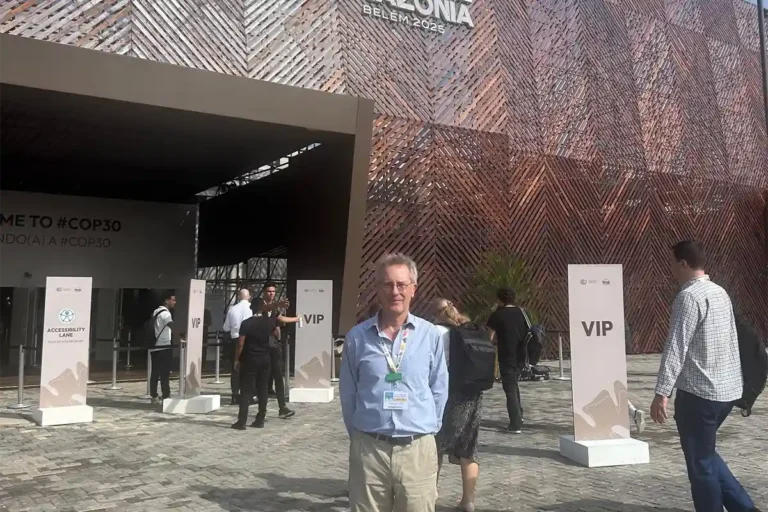
COP30 is being hosted by Brazil in Belém, a port city at the mouth of a large river system in the Amazon region. Hence, it is very hot and humid. A main ambition of COP30 is to increase climate funding to developing countries, building on the Baku to Belém Roadmap agreed at COP29 to increase funding from the $300m agreed at COP29 to $1,300m by 2035. Another aim of COP30 is to make progress toward achieving indicators for a Global Goal on Adaptation. Very importantly, COP 30 should assess the Nationally Determined Contributions (NDCs), which were meant to be updated and submitted earlier this year, now looking to 2035 and representing advancement over previous NDCs, and whether they reflect the ambition necessary to meet the global climate goals.
There will also be work on the Just Transition Work Programme (JTWP), a framework for advancing equitable, people-centred climate action. With Brazil’s COP 30 presidency emphasising social justice, decent work, and sustainable development, the JTWP could become one of the main outcomes.
The COP got off to a relatively good start, with the adoption of agendas, i.e. the work topics to be covered at this COP. The Brazilian Presidency moved contentious items proposed by countries into consultations.
Luiz Inácio Lula da Silva, President of Brazil, noted the significance of hosting the COP in Belém, in the Amazon region. He pointed to the opportunity to reclaim the enthusiasm of the Rio Earth Summit that started the UNFCCC in 1992. He commented on the current era of fake news and misinformation, and called upon delegates to reject falsehood and fear and urged world leaders to accelerate their climate action, in line with the Call of Belém for the Climate issued during the COP 30 Leaders’ Summit.
In a video message, Jim Skea, Chair of the Intergovernmental Panel on Climate Change (IPCC), noted that 2024 was the warmest year on record at 1.55°C above preindustrial levels and that implementation of all Nationally Determined Contributions (NDCs) would still lead to 2.3-2.5°C warming by the end of the century.
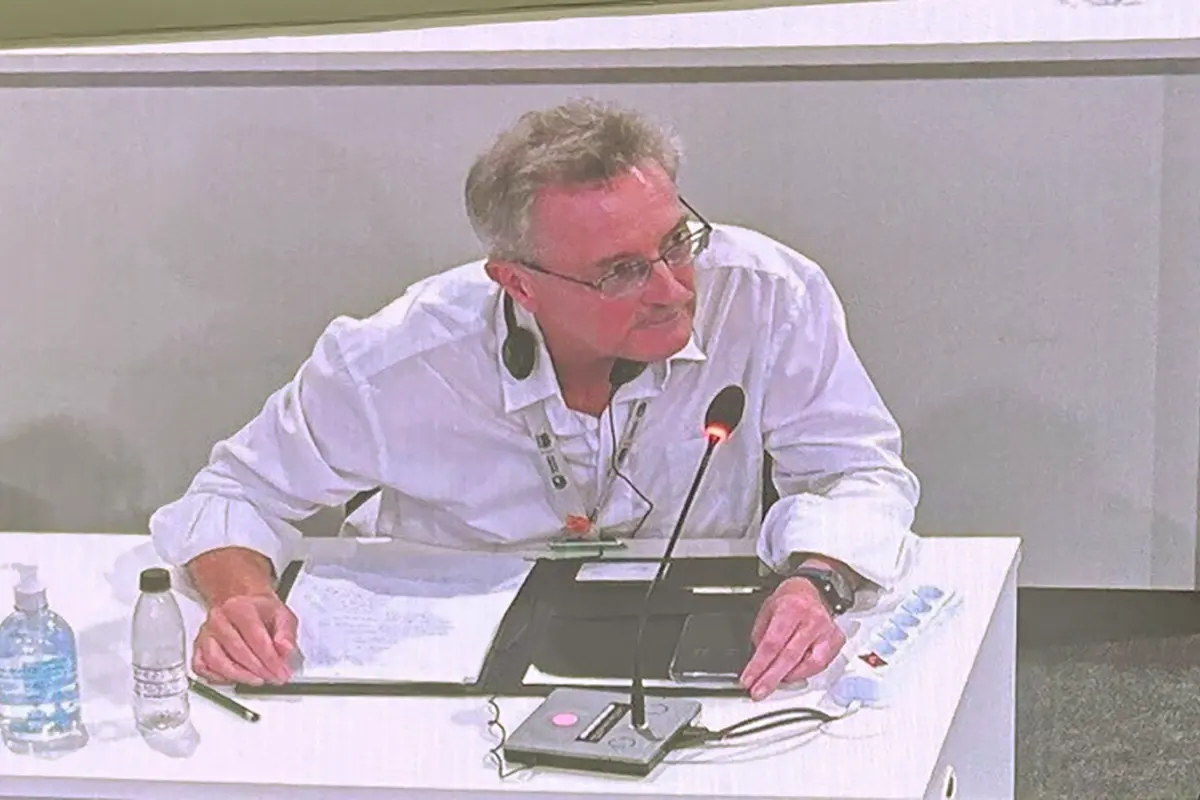
In terms of negotiations most relevant to CCS and engineered CDR iw the Paris Agreement Crediting Mechanism (also still known by its original name, the Article 6.4 mechanism). This year, standards have been agreed on for Removals and, very recently, for Reversals from Removals. This means there are not expected to be any key negotiations directly relevant to CCS and engineered CDR. There will be information events here on these developments. On Tuesday evening, I attended a UNFCCC event marking the milestones in the Paris Agreement Crediting Mechanism (PACM), as it is ten years since the Paris Agreement and it is now finally in operation. Particular achievements noted were the Standard on Removals (which includes mitigation actions with a risk of reversal, ie CCS), the Standard on Reversals from Removals, and a standard on Baselines. The first Methodology has been approved (on methane from landfill sites). The Vice-Chairs Martin Hession and Maria Al Jishi, who have come to the end of their terms, noted the many hundreds of inputs that they have had over the last three years, especially on removals (as this has a broad scope covering both land-based and engineered). There are still concerns expressed by some stakeholders, ranging from those who think the standards are not rigorous enough to those who think they are too rigorous. Martin emphasised that they always aimed to be based on the best available science. I asked a question on PACM liaising with the International Civil Aviation Organisation (ICAO), which is also considering how to address removals and reversals in their CORSIA scheme to decarbonise airlines.
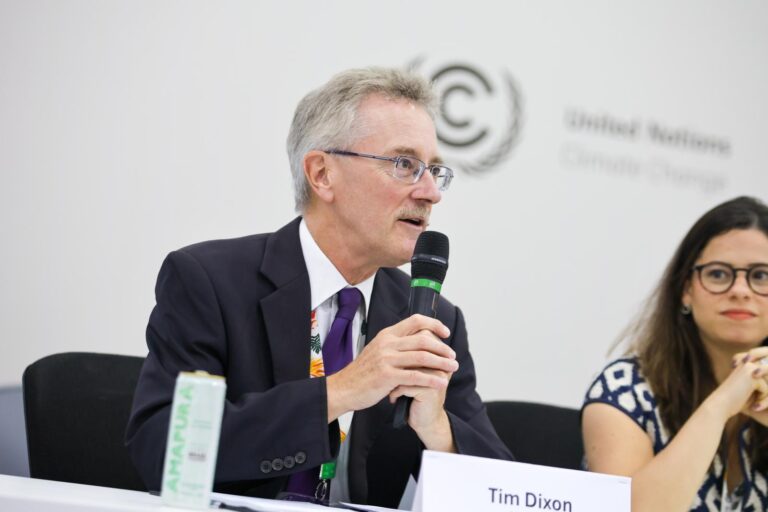
There are numerous CCS-specific events at COP30. A UNFCCC Side-event has been organised again by IEAGHG, University of Texas, CCSA, International CCS Knowledge Centre, and Bellona. This will be on “The Role of Non-State Actors in Delivering CCS in Latin America and the Caribbean”. It will be on Saturday 15th at 11:30-13:00 in Side-Event Room 9. This will be our twelfth COP UNFCCC Side-event. For the first time the GCCSI also have a UNFCCC Side-event on “Low Emission Technologies in Hard-to-Abate Sectors”,which is on the 19th at 18:30-to 20:00. IEAGHG is also involved in a UK government organised event in the UK Pavilion on “CCUS Myth Busting Live”, on the 17th at 10:00-11:30. For the first time at COP there is a Blue Zone pavilion dedicated to CDR, “CDR30”, organised by the Negative Emissions Platform, hosting a number of CDR events. For a good listing of CCS-related events, see CCSA’s listing at COP30 – CCSA and GCCSI’s at The Global CCS Institute at COP30 | Global CCS Institute.
IEAGHG will also share in an exhibit booth again, with the University of Texas, CCSA, and the International CCS Knowledge Centre, to further share information on CCS. This will run from the 17th to the 20th of November, booth 40.
This COP is smaller than recent ones, with attendance in the Blue Zone limited to 50,000. The air conditioning inside the COP is working hard to keep the temperatures reasonable. The temperatures, humidity and heavy rain showers are providing delegates with additional challenges to those normally expected at COPs, including hearing speakers over the sound of the torrential rain on the roofs. Umbrellas are necessary here and are available to hire!
Other articles you might be interested in

Get the latest CCS news and insights
Get essential news and updates from the CCS sector and the IEAGHG by email.
Can't find what you are looking for?
Whatever you would like to know, our dedicated team of experts is here to help you. Just drop us an email and we will get back to you as soon as we can.
Contact Us Now