

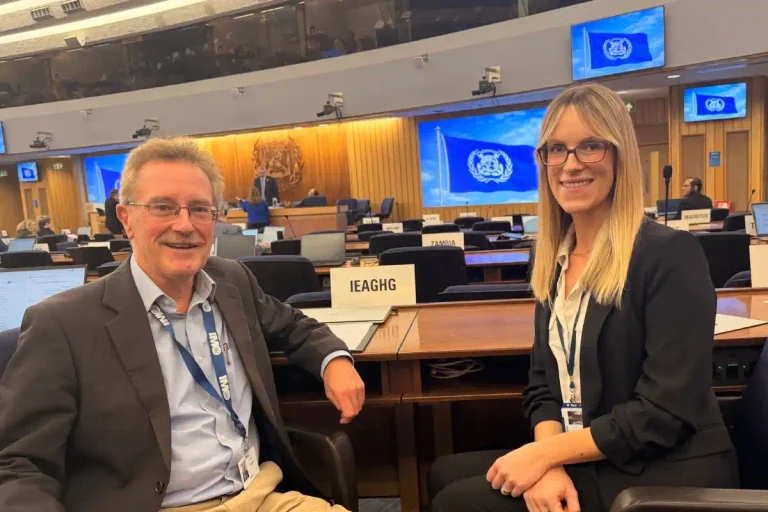
London Convention and London Protocol Annual Meeting LC47/LP20 meeting 2025
News & Blogs
3 November 2025
In London Convention and London Protocol Annual Meeting 2025, much time was spent on marine geoengineering (MGE), and there was the usual agenda item on carbon capture and storage (CCS) development.
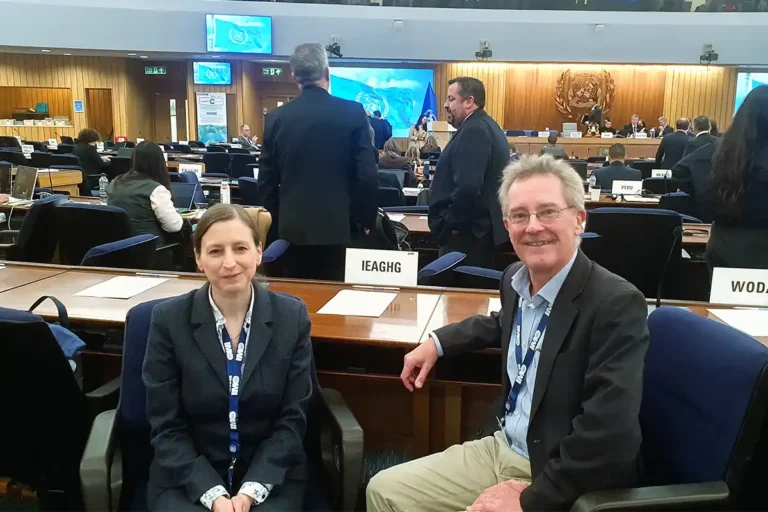
In London Convention and London Protocol Annual Meeting 2025, much time was spent on marine geoengineering (MGE), and there was the usual agenda item on carbon capture and storage (CCS) development.
CCS
As usual, this meeting asked for updates on the acceptance and ratification of the 2009 CO2 Export Amendment and use of the 2019 Provisional Application of the Export Amendment. The number of countries that have accepted the 2009 Amendment is now 15: Norway, the UK, the Netherlands, Iran, Finland, Estonia, Sweden, Denmark, Korea, Belgium, Switzerland, Australia, Croatia, Spain, and, most recently, France. So, there is progress, but it is still a long way from coming into force as it needs 37 of the 55 Parties to the Protocol to accept it.
Hence, the need for the 2019 Provisional Application of the 2009 Export Amendment, which countries can use now for exporting/importing CO2 for CCS. There are now twelve countries that have submitted declarations to the IMO: Norway, the Netherlands, Belgium, Denmark, Korea, Sweden, UK, Switzerland, Australia, Finland, Spain, and France. There are ten bilateral agreements in place, many with Norway.
Country updates on the Export amendment were provided by Finland and Germany, both of whom are preparing to ratify the 2009 Amendment.
In terms of sharing experiences with offshore CO2 storage, a correspondence group was underway, led by Japan and Australia, to survey the experiences in application of the CO2 Specific Guidelines (2007 originally and 2012 version amended for export) for the issuing of permits (see IEAGHG blog ‘CCS at the London Convention’s scientific group meeting SG47’ – IEAGHG). This was reported into the London Convention Scientific Group meeting in 2025, and there the countries decided to pause the group, to await more information from experiences.
Updates were provided by Australia on their revised National Action Plan (list of impurities and acceptable levels in the CO2 stream, which is due to be published in 2026), Italy on experiences from monitoring the pilot injection at the Ravenna project, Germany, and UK on the two final investment decisions (FIDs) on offshore storage and their 27 offshore storage licences awarded. Also reporting were Norway on their seven bilateral agreements, including with Switzerland, the 14 licences awarded for offshore storage, and the successful start of the Northern Lights project, by the Netherlands on an update on Porthos (under construction and operating in 2026) and Aramis projects, where Aramis is expecting to receive CO2 from other countries and be operational in 2029/30, from Japan on their CCS Business Act and licensing two areas for exploratory drilling offshore (Tomakomai and Kujukuri).
IEAGHG gave an update on related IEAGHG activities, including the Offshore Geologic CO₂ Storage Workshops organised jointly with the Gulf Coast Carbon Center at the University of Texas, with the report of the 7th Offshore Workshop now available (7th International Workshop on Offshore Geologic CO2 Storage – IEAGHG) and the 8th Offshore Workshop being planned for April 2026 in Bergen with a visit to the Northern Lights projects (which we emphasised was operational and enabled by the 2019 Provisional Application). We also reported on the upcoming report on guidance on agreements and contracts for transboundary projects under the London Protocol (just presented to members and due to be published soon), the offshore content and conclusions of the 2025 Risk Management and Monitoring Networks meeting, the developments in Japan where four projects are being assessed which would export CO2 to other countries, and the capacity building activities in the Global South which included London Protocol information (in Colombia, Morocco and Mexico).
Greenpeace recognised the value of the information provided and asked for more sharing of information on offshore CCS developments and experiences. ACOPS asked for the focus to be on only CO2 from hard-to-abate sectors.
The IMO Secretariat encouraged countries to accept the 2009 amendment, noting that CCS is an effective climate change mitigation technology and contributes to meeting the Paris Agreement targets, and to notify the Secretariat of any agreements or arrangements.
The IMO provided an update from their Future Fuels and Technology Project on the reduction of greenhouse gas (GHG) emissions from ships, which includes Onboard Carbon Capture and Storage (OCCS) on which they held a webinar event on 11 September (Technical Seminar on Onboard Carbon Capture and Storage (OCCS) Systems). This is part of the broader work towards a regulatory framework for OCCS under the Marine Environment Protection Committee (MEPC) 83. The IMO encourages Parties and Observers to submit more detailed information about CCS projects and experiences with permitting, and to ratify the 2009 amendment and to notify the secretariat of any bilateral agreements.
Marine Geoengineering
Much work is underway on marine geoengineering (MGE). The 2013 amendment to the London Protocol intends to bring into force regulation of MGE, prohibiting it except for research purposes, and in those cases needing an assessment framework for the issuing of permits. The countries were reminded of the importance of increased acceptances of the 2013 amendments to the Protocol, as the entry into force of the amendment would be the best way to allow the Contracting Parties to progress the work regarding MGE. In recent years, the Parties adopted three statements, two by the governing bodies in 2022 and 2023 and one by the Scientific Group in 2022, all highlighting the urgency of this work against the background of the rapidly growing private sector interest in MGE techniques. These can be seen in a new specific IMO web area for MGE (Marine geoengineering).
Since last year, there have been two intersessional correspondence groups on MGE, a legal group and a Scientific Group. This topic took up more time than any other subject in this annual meeting. A matter of concern to many countries and NGO observers is the large number of private sector marine carbon dioxide removal (mCDR) projects underway or planned and that also seek commercial benefit from carbon credits, and that these projects are not necessarily being permitted or sharing the science generated.
Also of concern is the slow acceptance of the 2013 Amendment to control MGE under the London Protocol. Only nine countries have accepted so far (Australia, Croatia, Denmark, Estonia, Finland, Germany, Netherlands, Norway, UK), which is three more than last year, but for it to come into force 37 are needed out of the 55. There is an ongoing debate whether an amendment can be amended before it comes into force, so as to add further MGE techniques to the ocean fertilisation technique, which it presently covers. The techniques which are proposed to be added are ocean alkalinity enhancement, marine geoengineering with biomass, and surface albedo enhancement, and there is ongoing consideration of marine cloud brightening.
Countries provided updates on MGE activities in their jurisdictions, including USA, Germany, and Canada. This meeting agreed to establish a Working Group on MGE for the duration of this meeting, under the chairmanship of the Netherlands and Panama. The conclusion of this Working Group was to re-establish an intersessional working group to develop further a draft resolution on the application of the London Protocol to MGE, better definitions of the four new MGE techniques, how to apply the draft assessment framework to these techniques, identify how to list further techniques, and consider the relevance of the new UN Highs Seas Treaty “Biodiversity Beyond National Jurisdiction” (BBNJ).
IEAGHG had provided information at last year’s meeting (LC46) on the IEAGHG report 2024-09 on MRV for CDR, which includes mCDR as one of the four categories covered. Also, IEAGHG had provided an update on the IPCC work to develop a Methodology Report on CDR, with the two meetings held in 2024 (which IEAGHG participated in) with a view to producing a report by 2027. This is proposed to have a volume on mCDR as well as other engineered and nature-based techniques. [Note the IPCC 63 meeting was underway at the same time as LC47 and agreed to the work for this Methodology Report, details in due course].
IEAGHG also observed to the IMO that the London Protocol is the leading international treaty in acting on geoengineering, in general, and other treaties/agreements look to the London Protocol as a result (as they did with the regulation of CO2 geological storage since 2006).
MGE will continue to be a hot topic with much work to be done in the London Protocol for the foreseeable future, as more research and commercial activities take place around the world.
As in recent years, IEAGHG were the only CCS-specific organisation present in the London Convention meeting. IEAGHG’s Tim Dixon attended the CCS and some of the MGE parts, Sam Neades attended the CCS part, and Jasmin Kemper attended the MGE parts.
Public information on the London Convention is available at Convention on the Prevention of Marine Pollution by Dumping of Wastes and Other Matter (imo.org). For background on the CO2 Export Amendment, Resolution and guidelines, see IEAGHG report 2021-TR02 Exporting CO2 for Offshore Storage – The London Protocol’s Export Amendment and Associated Guidelines and Guidance – IEAGHG .
Other articles you might be interested in

Get the latest CCS news and insights
Get essential news and updates from the CCS sector and the IEAGHG by email.
Can't find what you are looking for?
Whatever you would like to know, our dedicated team of experts is here to help you. Just drop us an email and we will get back to you as soon as we can.
Contact Us Now