

Key Takeaways from the 2nd Network of National CCUS Centres of Excellence Network Meeting
News & Blogs
10 February 2026
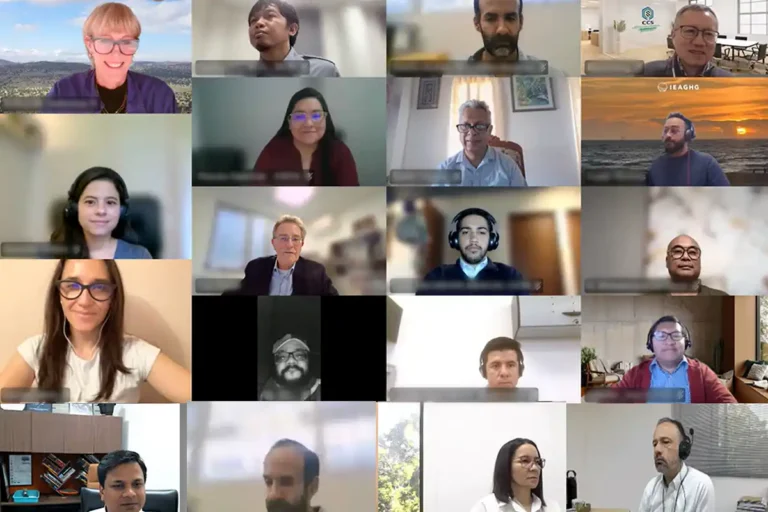
The second meeting of the Network of National CCUS Centres of Excellence (NNCCE), co-organised by IEAGHG and UT-BEG Gulf Coast Carbon Centre, brought together centres from across the Global South for a focused discussion on recent developments and the sharing of information resources. Discussions were structured and concise, reflecting a group that is increasingly comfortable working together.
Thirteen centres joined from across Asia and Latin America. Each was asked to provide a short update on what had changed since the last meeting and to highlight information resources that could be shared. Keeping the updates to five minutes helped maintain momentum and created space for exchange rather than repetition.
Updates were shared by centres from Trinidad and Tobago, Indonesia (ITB and Indonesia CCS), Colombia (Ecopetrol), India (IIT Bombay), China (Northwest University), Mexico (MeCCS), Brazil (Brasil CCS), Nigeria, and Ecuador (ESPOL), alongside contributions from IEAGHG, the Gulf Coast Carbon Center, and the International CCS Knowledge Centre. This meeting marked the first presentations from MeCCS (Mexico) and Brasil CCS, and also welcomed ESPOL (Ecuador) as the newest member of the NNCCE.
Across the updates, a common picture emerged. Centres are at different stages of development, but many are dealing with similar issues: building technical capacity, improving data access, engaging policymakers, and preparing projects that can eventually attract financing. While progress looks different from one country to another, the underlying challenges are often shared.
One update that drew particular attention was India’s recent budget announcement, committing USD 2.4 billion to CCUS over the next five years. Rather than being treated as a headline, it became a useful reference point in the discussion — prompting reflection on how sustained public funding can help move CCUS activities from early studies towards more structured programmes.
The discussion that followed the updates reinforced the value of the network as a practical space for exchange. Participants referred to reports, studies, training initiatives, and institutional approaches that could be shared with others. Several follow-up conversations were identified, reflecting a growing willingness to engage directly and learn from experiences across regions.
Some of the most productive moments came from informal exchanges — questions raised between presentations, comments on shared constraints, and suggestions for bilateral follow-up. By the end of the meeting, it was clear that information and resources were already circulating within the network.
The overall impression from the second NNCCE meeting was one of measured but real momentum. Capacity building, sharing resources, and improving readiness for finance remain everyday challenges for many centres. What is changing is the extent to which these challenges are being addressed collectively, through a network that is steadily becoming more connected and more confident in its role.
Other articles you might be interested in



Get the latest CCS news and insights
Get essential news and updates from the CCS sector and the IEAGHG by email.
Can't find what you are looking for?
Whatever you would like to know, our dedicated team of experts is here to help you. Just drop us an email and we will get back to you as soon as we can.
Contact Us Now