

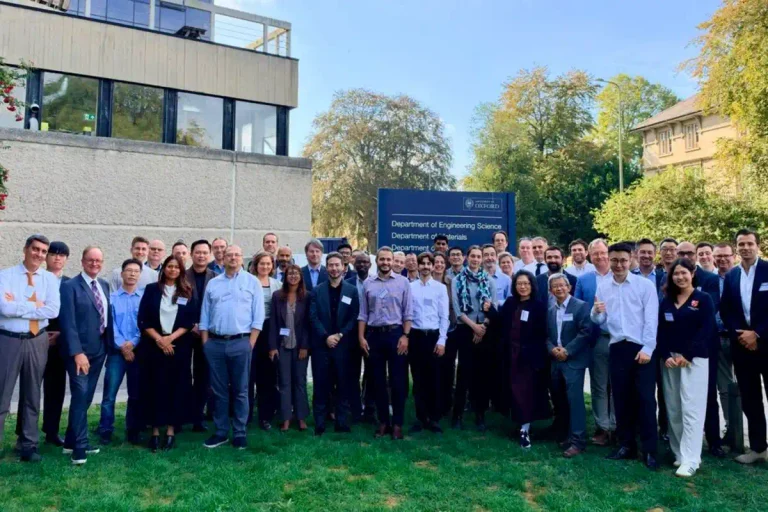
UTCCS-8 Conference: 25 years of the Gulf Coast Carbon Center, and positive developments on US Gov funding!
News & Blogs
2 February 2026
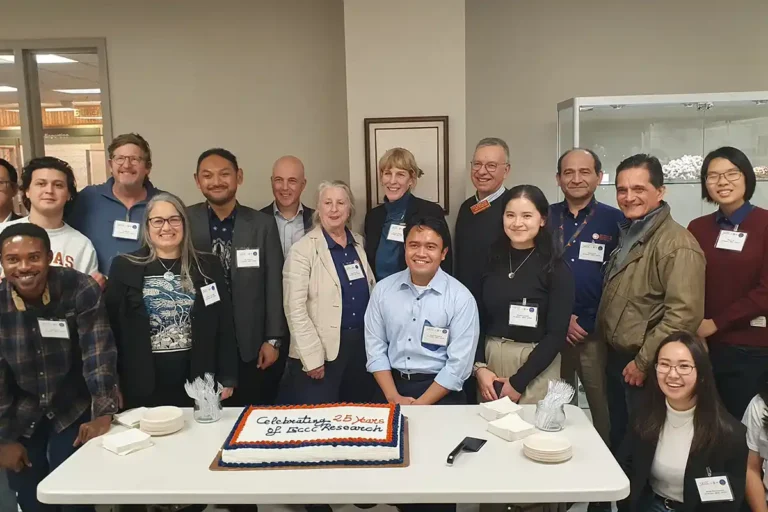
The University of Texas (UT) at Austin held its 8th conference on CCS from 27th January in an unusually cold Austin. This biannual conference combines research and activities from the Gulf Coast Carbon Centre (GCCC), which are storage-focused, and the Texas Carbon Management Programme (TxCMP), which are capture-focused, also in collaboration with the UT Energy Institute. The first two of these are long-running industry-sponsored programmes. Of note was the celebration of the 25th anniversary of the GCCC since the last conference, with a very large birthday cake being commissioned!
The event was opened by Lorena Moscardelli, Director of the Bureau of Economic Geology, celebrating the achievements of the GCCC over the decades, and emphasising the importance of industry sponsors.
Gary Rochelle, the lead of TxCMP, gave a historical perspective on amine capture, from 1930 to the present day, including comparison to other capture technologies, and the predicted capture costs that are now being realised, and future predictions to 2040.
A Canadian perspective was provided by Corey Wood of Entropy, who gave a keynote on their CCS project development work in Canada. This included the Glacier Gas Plant that has started operating. I noted with interest that this includes capturing the CO2 from reciprocating engines as well as from the gas processing and gas turbine. Also from Entropy, David Hills gave a keynote on the Bow Valley Carbon Hub, in particular its geology, where storage will be in dolomitized carbonate formations with an anhydrite sealing formation, and the value for CO2 storage of data from 77 years of oil production there.
The conference was divided into two parallel sessions, one on capture (TxCMP) and one on storage (GCCC). The following are some of the highlights from the storage sessions.
Alex Bump gave very interesting presentations on the relatively new term “Composite Confinement”, which essentially is geological storage of CO2 without a low-permeability sealing layer, relying instead upon the other trapping mechanisms in a multi-layered system of discontinuous barriers. Think of many layers of Swiss cheese. This increases storage capacity greatly.
Angela Luciano presented a real-life case study of pressure interference between Class I (hazardous waste) and Class II (oil and gas industry) wells. The standards required for Class I wells are much higher than for Class II. The Class II here was being used for salt water disposal (SWD) and caused a pressure buildup at the Class I well, causing it to exceed its permitted pressure limit even though the operators had met the Class I permit requirements. Alex Bump also showed work that took legacy data from Class I and Class II wells to draw implications for CO2 storage resource exploration.
Angela Luciano also presented an update on their work on pressure interference governance for CO2 injection wells, looking at the regulations in Texas, Alberta, UK and Norway. Katherine Romanak presented on the potential for some US EPA Class VI wells to be exempted from drinking water classifications for certain levels of salinity, which rule out the use for drinking water, as some other well types have such exemptions.
Gordon Chen presented on updates to EASITool, the storage capacity modelling tool developed by UT. The current version has some 200 registered users.
Sue Hovorka presented on legacy well issues for CCS projects, observing that CO2-EOR projects can have a high population of legacy wells without any major problems. Sue also recommended the development of best practices for the management of CO2 monitoring wells. Sue presented their work on the different types of cost implications for the insurance industry in very-worst case scenarios.
The work by Angela Luciano on GCCC’s engagement with schools was very impressive and covering all student ages, with very positive impacts. The work includes monitoring exercises, fact sheets and surveys. “I felt like a real scientist” was one student’s feedback. In addition, Sue shared how they were training regulators, and Hailun Ni on the CCS training courses developed and available from the University (in-person and online). Katherine Romanak gave a review of the GCCC’s other communication activities and an update on GCCC’s role in the new Network of National CCUS Centres of Excellence in the Global South (in collaboration with IEAGHG).
Katherine Romanak gave a review of the Offshore CCS workshop series since its start ten years ago. This workshop series started from an idea by the GCCC that was picked up by the Carbon Sequestration Leadership Forum and then delivered by GCCC and IEAGHG. At that first workshop in 2016, the Northern Lights project was first announced in public as an idea; now it is constructed and operating. Katherine also mapped other technical developments against the seven workshops, including monitoring, use of depleted fields, transport and shipping, environmental assessments, and regulatory developments. The offshore CCS world has progressed significantly over these ten years! The workshops have helped move offshore CCS from theory to reality, creating a shared international knowledge base at exactly the time projects and regulations were being formed, and acting as a convening space where industry, regulators, and researchers could co-evolve solutions. The 8th workshop will be hosted by Equinor in Bergen on 20-23 April, including a visit to the Northern Lights facility, very appropriately!
Tip Meckel gave a summary of the current CCS landscape in Texas, noting that currently there are 64 Class VI well applications submitted, and that three have been granted (to ExxonMobil for their Rose CCS project). He also noted the growth in AI datacentres and their need for power in a power-limited grid.
Alex Bump presented a proposed well-test field project to examine a Class VI borehole closure by shale creep, to be called “Project No Hole”. There is a precedent with a test on a Class I well which took just 4 days to close from shale creep.
A highlight of the conference was provided by Vanessa Nunez, who shared some hot-off-the-press news on US DOE funding for carbon management. On the 15th January the Senate had approved an Energy and Water Development Bill for FY2026 which includes $59 million funding for a range of DOE CCS projects, including the CarbonSAFE program. The President then signed it into law on the 23rd January (H.R. 6938). This potentially releases funds and projects that had been frozen. In another Bill at the same time, there is more funding to EPA for dealing with Class VI applications. The reaction of the conference attendees to this news was very positive but also cautious, given the uncertain nature of the policy environment.
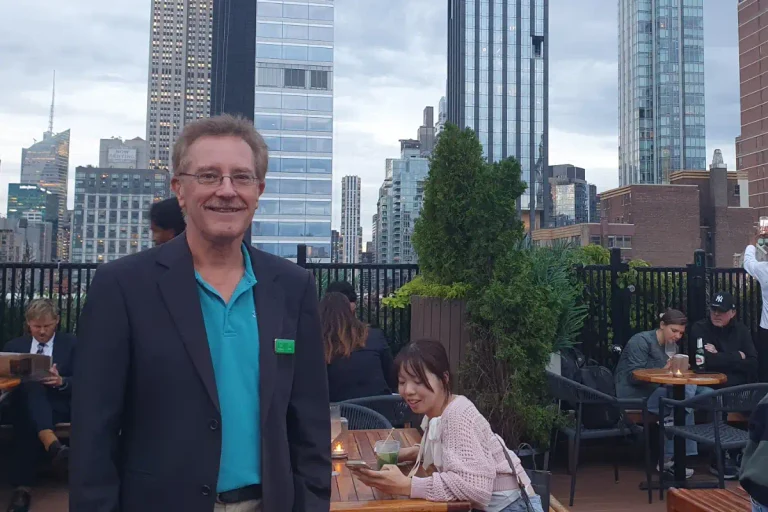
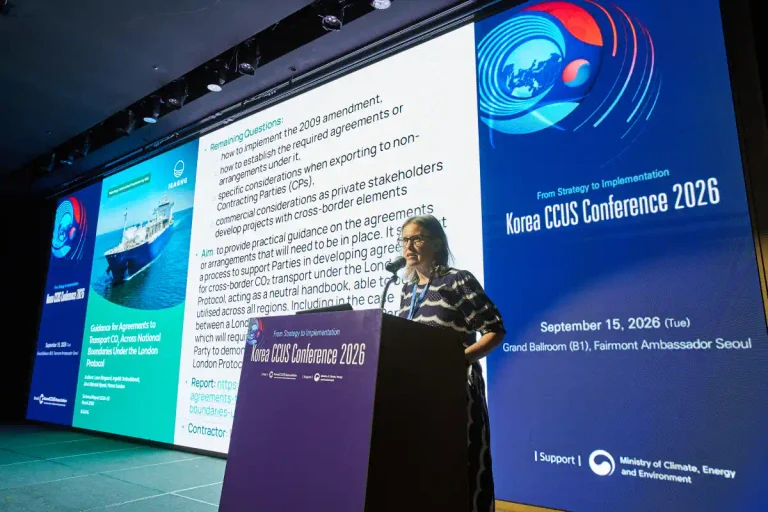
I was invited to present on the latest developments with the insurance industry on CCS, which got a lot of interest (and there is very relevant work by the GCCC as well as being an active area for IEAGHG). I also presented on global CCS developments, highlighting where UT expertise is needed around the world, and on COP30 outcomes for CCS globally, to provide the global relevance for UT work.
Sue Hovorka concluded the conference with suggestions for research topics for the next five years of the GCCC, looking at what will be needed for commercial CCS deployment in 2031, to be discussed and approved by their members later this year.
In all, a very exciting conference, in addition to the winter storm challenges! This UTCCS conference series is interesting because of the historic development of knowledge and experience by UT with real CCUS projects, and the close relationship between the research there and industry’s needs. The topics and activities in both programs are funded by the industry sponsors (as well as some by DOE projects). We hope to see much of this recent work presented to the rest of the world at GHGT-18 in Perth in October. The US Gulf Coast region continues to be a hotspot for CCS developments!
Other articles you might be interested in
Get the latest CCS news and insights
Get essential news and updates from the CCS sector and the IEAGHG by email.
Can't find what you are looking for?
Whatever you would like to know, our dedicated team of experts is here to help you. Just drop us an email and we will get back to you as soon as we can.
Contact Us Now