

Reflections from the EPFL CCUS Stakeholder Dialogue
News & Blogs
27 July 2026
What Switzerland’s carbon-management community says is needed to turn technical progress into a credible route to net zero.
Switzerland’s route to net zero will require more than promising carbon capture, utilisation and storage technologies. It will depend on connecting those technologies into complete value chains, creating investable projects and establishing the policy and transport infrastructure needed to move captured carbon dioxide to permanent storage.
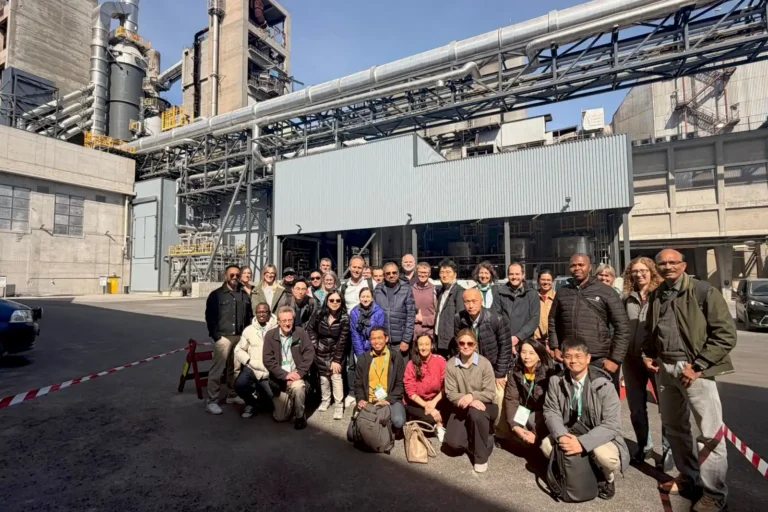
That was the central message from the EPFL CCUS Stakeholder Dialogue, hosted by the S4S CCUS Project, EPFL Vice Presidency for Support to Strategic Initiatives and EPFL Energy Center at the Energypolis Campus in Sion, Switzerland, on 15 June 2026. The event brought together researchers, policymakers and industry practitioners to examine how carbon management could contribute to Switzerland’s 2050 climate target. I contributed to the scene-setting session with an overview of the global status of carbon capture, utilisation and storage (CCUS) and recent developments, joined the closing panel and helped judge the student poster awards.
Why CCUS matters for Switzerland
Switzerland has committed in law to net-zero greenhouse gas emissions by 2050. Deep reductions across buildings, transport and industry remain the priority, but residual emissions from activities such as waste-to-energy (WtE) plants, cement production and aviation will still need to be addressed. This makes CCUS, alongside carbon dioxide removal (CDR), an important part of the national climate toolkit.
The discussion made the scale of the challenge tangible. Switzerland has a relatively small number of concentrated industrial sources, yet an anticipated carbon transport and storage requirement of around 7 million tonnes of CO₂ per year by mid-century. Domestic geological storage potential remains uncertain, while mineralisation in recycled concrete can absorb only a modest share. International cooperation—and access to storage beyond Switzerland’s borders—will therefore be essential.
Speakers also highlighted practical progress: a WtE capture pilot, the DemoUpCARMA project and a planned legislative proposal for a post-2030 framework. Together, these initiatives show momentum, but they also underline the need to move from individual demonstrations to a coordinated national system.

Building the technology chain
The S4S CCUS Project is deliberately taking a system-wide view, spanning capture, including direct air capture (DAC), utilisation, geological storage and process integration. That breadth matters: a high-performing capture process has limited value unless the CO2 can be conditioned, transported, used responsibly or stored permanently.
EPFL researchers are advancing graphene membranes for post-combustion capture from technology readiness levels 4–5 towards 7. The membranes are designed to remain stable in harsh flue-gas conditions, and a 1,000h stability demonstration has already been completed at a WtE plant. The next ambition is a 1 t/day system in 2027.
For DAC, amine-grafted metal-organic frameworks (MOFs) are showing fast kinetics and comparatively stable CO2 capacity across different humidity levels. A dedicated testing unit is now being built, providing a bridge from material development to integrated process performance.
CO2 utilisation work ranged from power-to-methane (P2M) systems to CO2 electrolysis. A reversible 30 kW demonstration is under development to respond to seasonal energy needs, while electrolysis research has achieved more than 500h of operation without salt-precipitation problems by stabilising the copper catalyst with an ionomer.
Storage research is progressing through trials at the Mont Terri Rock Laboratory in Jura and at Trüllikon in Zürich. At the same time, process-integration work is examining hybrid DAC configurations and the feedback loops between process and energy system models. The clear lesson is that optimisation cannot stop at the equipment boundary; it must account for energy supply, markets and infrastructure across Europe.
What deployment looks like in practice
The industry case studies brought the commercial realities into focus. In cement, Holcim estimates that CCUS accounts for 44% of its route to net zero and is using its CaptureLab platform to test technologies at up to 30 tCO₂/day. The wider message was equally important: industrial decarbonisation depends on collaboration across sectors rather than isolated optimisation.
At KVA Linth, plans for a full-scale WtE CCS project illustrate both the opportunity and the challenge. The proposed facility would capture around 130,000 tCO₂/yr, with CO2 transported by pipeline to a rail-loading station. However, the project has been paused amid uncertainty over financing, risk allocation and permitting. Estimated costs of roughly 360 CHF/tCO2 stored—and lifecycle emissions driven largely by transport—show why infrastructure planning is crucial.
Airfix offered another perspective through a first commercial Swiss bioenergy with CCS (BECCS) project. The Niederwil plant is designed to capture 4,300 tCO₂/yr for transport to and storage in Denmark, with a later scale-up to 27,000 tCO₂/yr. Yet container logistics remain a major cost driver, and developers still face uncertainty over post-2030 regulation, technology permissions, the legal treatment of captured CO₂ and revenue from voluntary carbon markets (VCMs).
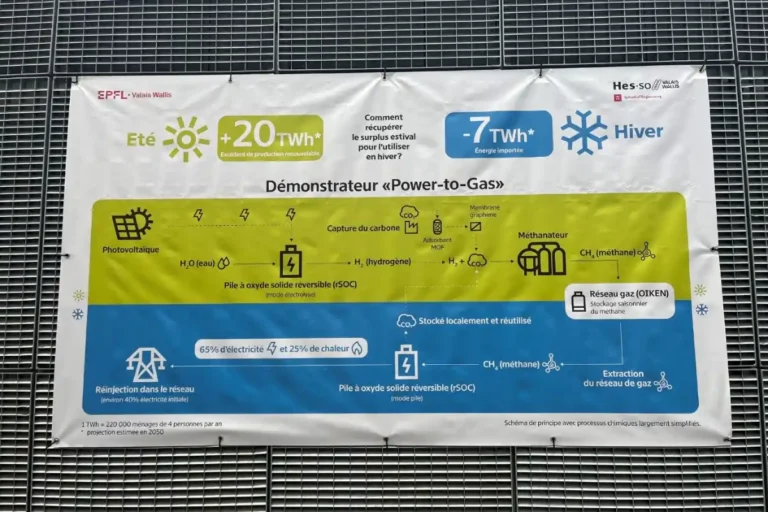
The GreenGas project demonstrated how power-to-gas (P2G) could support seasonal storage in a country facing summer electricity surpluses and winter deficits. Synthetic methane is not a universal solution, but it may be a useful enabler where electrification alone cannot balance the system.
Synthesising conclusions from the Dialogue to accelerate delivery
Across the day, four recurring barriers stood out:
- Transport and storage infrastructure: Switzerland needs a clear route from capture sites to domestic or international storage, with coordinated decisions on rail, ship and pipelines.
- Bankable business models: High first-of-a-kind (FOAK) costs and uncertain revenues make public support, contracts and credible risk sharing essential.
- Durable regulation: Project developers need clarity beyond 2030 on permitting, carbon accounting, cross-border transport and liability.
- Flexible policy: Because technology costs, public acceptance and storage access are uncertain, policy should preserve multiple pathways rather than lock in a single scenario too early.
One policy contribution proposed three complementary financing layers: pay-as-you-go (PAYG) support for early action, a net-zero fund to guarantee removals and a damage-linked responsibility fund with a global-justice dimension. Whatever instruments are selected, sequencing will matter. Early projects need enough certainty to proceed, while future policy must be able to respond as evidence and markets evolve.
The stakeholder dialogue showed a community with strong technical capability, credible pilot projects and growing commercial ambition. It also showed that the decisive work now lies between the projects: common infrastructure, coordinated policy, viable contracts and public confidence.
Switzerland has the ingredients to become an effective test bed for integrated carbon management. Turning that potential into climate impact will require sustained collaboration between government, researchers, infrastructure operators, emitters and storage providers/users of CO2. The question is no longer whether individual technologies can work. It is whether the surrounding system can be built quickly enough for them to work together at scale. Coming back to what EPFL President Prof. Anna Fontcuberta i Morral said during the opening session: “Let’s make sure our progress embraces values and makes humanity better.”
Other articles you might be interested in
Get the latest CCS news and insights
Get essential news and updates from the CCS sector and the IEAGHG by email.
Can't find what you are looking for?
Whatever you would like to know, our dedicated team of experts is here to help you. Just drop us an email and we will get back to you as soon as we can.
Contact Us Now