


IEAGHG Visits Brevik CCS: A World First for Full Chain CCS in Cement
News & Blogs
13 May 2026
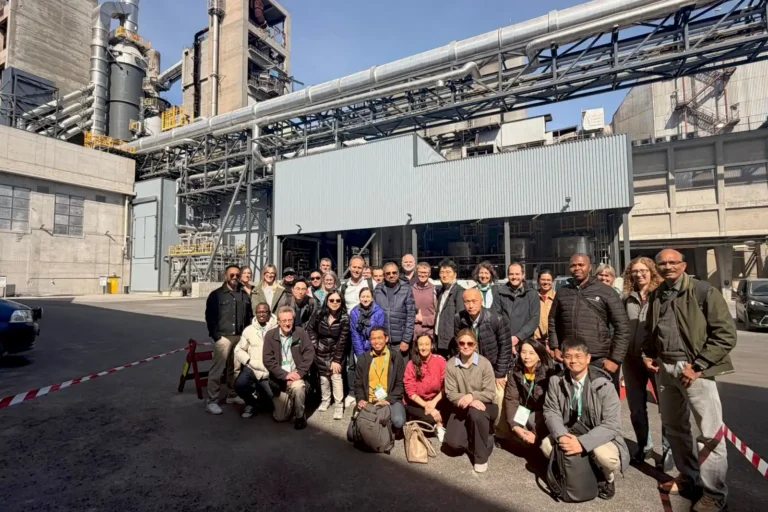
Following the IEAGHG 69th Executive Committee meeting in Oslo, Norway, the meeting host, the Research Council of Norway, organised a working visit to Porsgrunn, around 100 miles south of Oslo. The destination was Heidelberg Materials’ cement facility in Brevik, home to the world’s first full-scale carbon capture facility in the cement industry, using SLB Capturi technology, formerly Aker Carbon Capture.
IEAGHG visit to Heidelberg Materials’ Brevik CCS facility
The visit offered a timely opportunity to see one of Europe’s most important industrial decarbonisation projects up close. Brevik CCS is designed to capture around 400,000 tonnes of CO₂ per year, equivalent to about 50% of the plant’s emissions (limited by available waste heat), and forms part of Norway’s Longship project, which is operating a full value chain for CO₂ capture, transport and permanent storage for industrial emitters.
On arrival, we were welcomed by Tor Gautestad, Operational Manager for Brevik CCS, who joined the group on the bus and guided us through a tour of the project site.
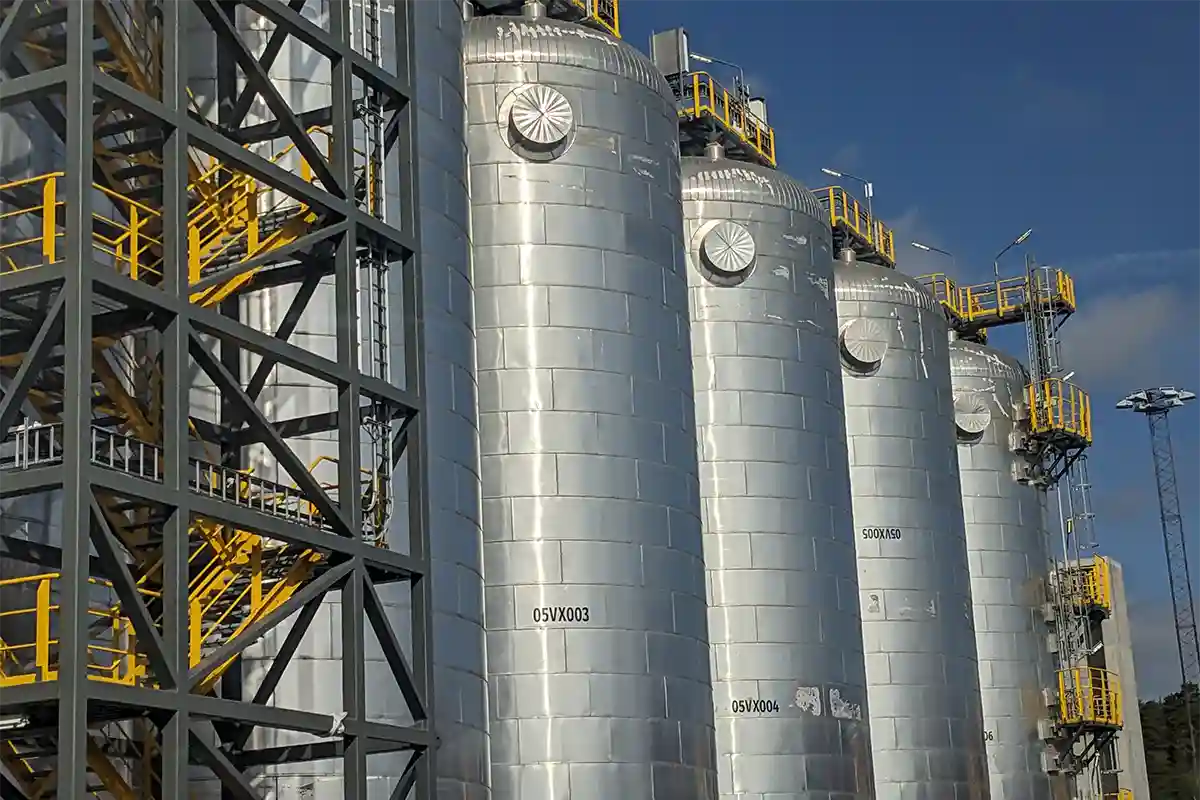
At Brevik, the captured CO₂ is liquefied and temporarily stored in six onsite tanks at -26 °C and 15 barg before being shipped. The group was informed that the liquid CO₂ storage capacity is around 5,000 tonnes, with a filling period of approximately four days.
One of the highlights of the visit was seeing the Northern Pathfinder onsite. The vessel, equipped with a wind-assisted rotor sail, forms part of the Northern Lights CO₂ shipping fleet. It is designed to transport liquefied CO₂ from capture sites to the receiving terminal in Øygarden before onward transport to permanent geological storage. The vessel has a storage capacity of around 7,500 tonnes of liquefied CO₂, a loading capacity of approximately 800 tonnes per hour, and a sailing time of around 24 hours to Øygarden.
Seeing this part of the chain physically onsite helped bring home a key point, CCS is not only about capture technology. It is also about critical components of conditioning, intermediate storage, shipping schedules, receiving terminals, injection infrastructure and long-term storage assurance.
The sight of the Northern Pathfinder gave a glimpse of what could become a major new industrial logistics sector. Just as oil and gas shaped global energy transport infrastructure over recent decades, CO₂ transport may become an increasingly important part of the next phase of industrial decarbonisation, particularly for sectors where emissions are difficult to eliminate through electrification alone.
Following the site tour, the group gathered in a meeting room where Tor provided an overview of the project. In practice, it became more of an interactive technical discussion than a conventional presentation, with plenty of questions and answers on the capture process, operational experience, transport arrangements and the wider Longship value chain. This made the visit especially useful, as it moved beyond project headlines and allowed for a deeper discussion of what it takes to move CCS from concept to operating infrastructure.
The visit also followed earlier IEAGHG visits to the project, including a visit by Tim Dixon, IEAGHG Director and General Manager, to Brevik in February 2025, and Nikki Clarke’s participation in the Brevik commissioning event in June 2025.
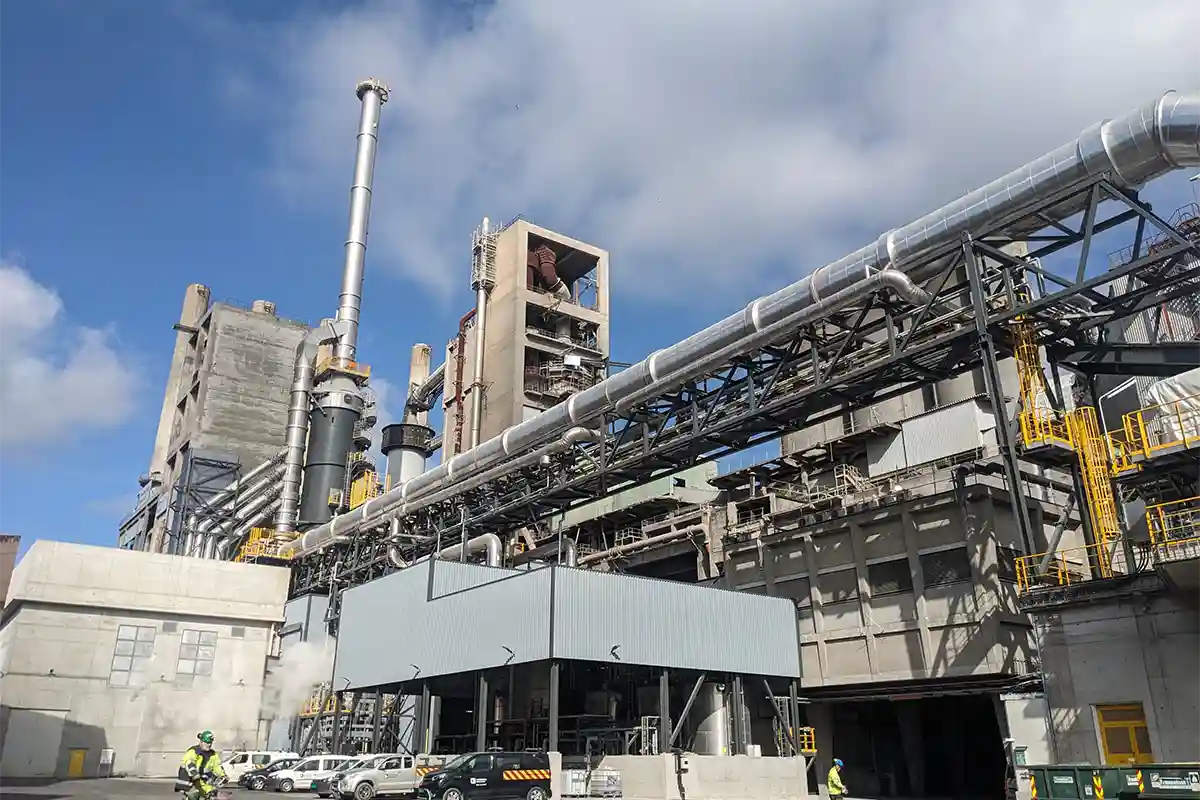
Overall, the Brevik visit was an excellent reminder that CCS deployment is fundamentally a chain activity. Capture capacity at an industrial site must be matched by reliable CO₂ conditioning, buffer storage, ship availability, receiving infrastructure and storage capacity. Any weakness in one part of the chain can affect the performance of the whole system.
Brevik also sits within a wider and growing wave of cement sector decarbonisation projects across Europe. While it is the first full-scale CCS facility in the cement industry to enter operation, other major projects are now moving forward. These include Heidelberg Materials’ Padeswood CCS project in the United Kingdom, which is expected to capture around 800,000 tonnes of CO₂ per year from the existing cement works, Holcim’s Carbon2Business project in Germany, which aims to capture more than 1.2 million tonnes of CO₂ annually, and Holcim’s GO4ZERO project in Belgium, which is targeting around 1.1 million tonnes of CO₂ per year by 2029. Together, these projects show that cement decarbonisation is beginning to move from individual flagship projects towards a wider deployment pipeline across Europe.
In this context, Brevik is more than a world first. It is an early operating example of what the next phase of cement and wider industrial decarbonisation may look like: carbon capture integrated into existing production, CO₂ conditioned and handled as a transportable commodity, and storage connected through dedicated infrastructure. As more projects progress from planning to delivery, the lessons from Brevik on integration, logistics, operational reliability and value chain coordination will be highly relevant to the wider roll out of CCS across hard to abate industries.
Other articles you might be interested in

Get the latest CCS news and insights
Get essential news and updates from the CCS sector and the IEAGHG by email.
Can't find what you are looking for?
Whatever you would like to know, our dedicated team of experts is here to help you. Just drop us an email and we will get back to you as soon as we can.
Contact Us Now