

IEAGHG Visits HyNet: From Padeswood Cement to Protos ERF CCS Projects
News & Blogs
26 June 2026
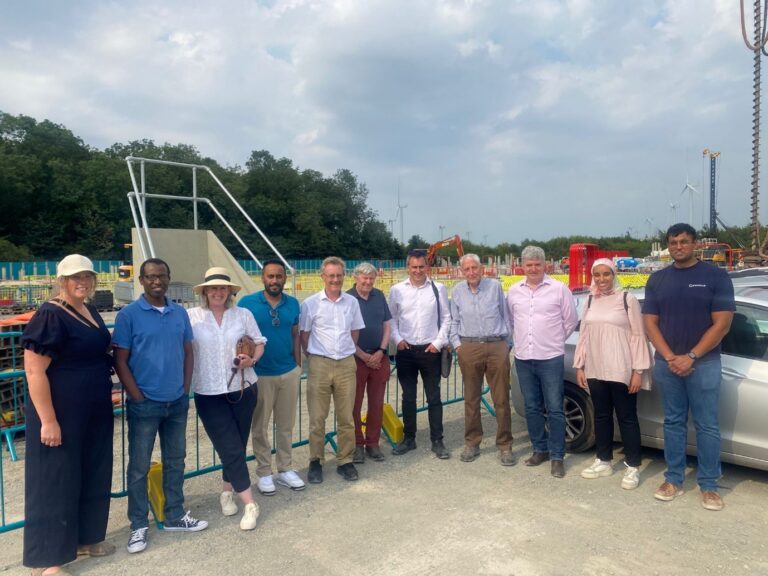
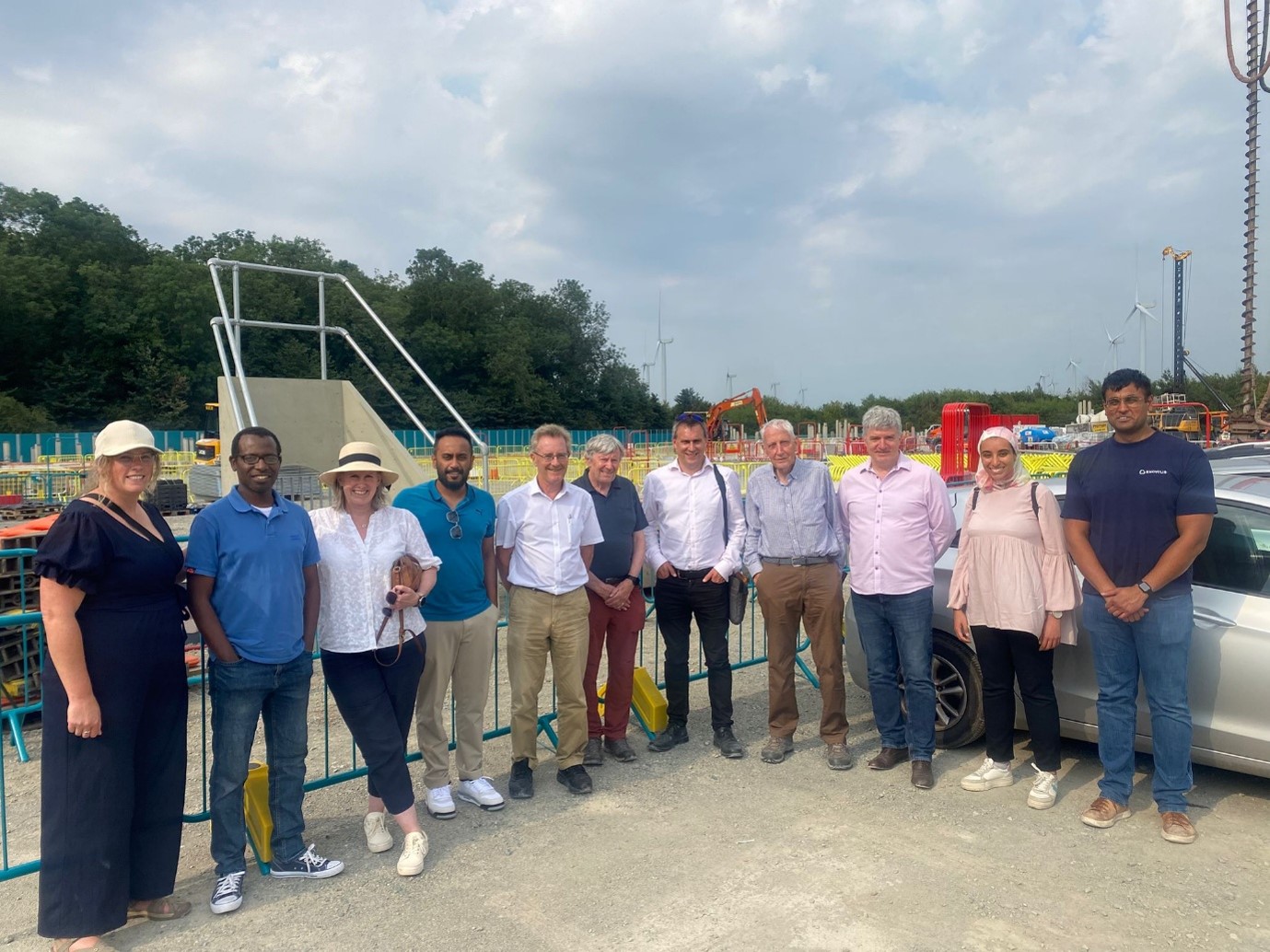
On a very hot summer day, 23 June 2026, the IEAGHG delegation led by Tim Dixon, (Director and General Manager of IEAGHG), and Professor Peter Cook AC, MBE, journeyed to Heidelberg Materials’ Padeswood cement CCS project in North Wales and Encyclis’ Protos Energy Recovery Facility CCS project in Cheshire. Both projects form part of HyNet, the industrial decarbonisation and clean energy cluster being developed across North West England and North Wales. HyNet aims to reduce regional industrial emissions by connecting major emitters to shared CO₂ transport and storage infrastructure, while also supporting the development of a low carbon hydrogen network.
Padeswood cement CCS project
The first stop was Heidelberg Materials’ Padeswood cement works, which is set to become the UK’s first carbon capture enabled cement facility. We were hosted by Chris Manson-Whitton, David Hanstock, Ellison Bean (Progressive Energy), and Gareth Price (Heidelberg Materials), who provided an overview of the project and its role within the wider HyNet cluster.
Cement remains one of the most difficult industrial sectors to decarbonise, largely because a significant share of its CO₂ emissions comes from the calcination of limestone, rather than from fuel combustion alone. This means that fuel switching and efficiency improvements, while important, cannot fully abate emissions from cement production. At Padeswood, early enabling works and site preparation are underway as the CO2 capture project progresses towards construction of the capture facility.
The Padeswood CCS project is therefore a significant step for industrial decarbonisation in the UK. The planned carbon capture facility is expected to capture around 800,000 tonnes of CO₂ per year from the kiln and the combined heat and power plant, which will provide energy for solvent regeneration. To advance deeper decarbonisation of the site, Padeswood is also increasing the use of biogenic alternative fuels in the cement production process, with the captured and stored biogenic CO₂ contributing to carbon removals alongside the abatement of fossil and process emissions. The captured CO₂ will be conditioned and transported by pipeline for geological storage beneath Liverpool Bay (in depleted gas reservoirs). The capture project is targeting commissioning in 2029.
HyNet Liverpool Bay CO₂ transport & storage
En route to our second stop, we took a short detour to view the area around Point of Ayr, Talacre in North Wales, where the onshore CO₂ pipeline is expected to transition offshore towards the planned Liverpool Bay storage system. Tim Dixon and Nicola Clarke from IEAGHG, together with David Hanstock, led the chat on the storage aspects of the HyNet system.
CO₂ captured from industrial sources in North West England and North Wales will be transported for permanent geological storage in Eni’s depleted gas fields offshore in Liverpool Bay, including the Hamilton Main, Hamilton North and Lennox fields. The new Douglas CCS platform will be configured to receive CO₂ from shore and distribute it to the offshore injection locations.
A key technical point discussed during the visit was that these reservoirs are relatively shallow compared with many offshore CO₂ storage projects, with implications for CO₂ phase behaviour, flow assurance, pressure management and reservoir operation. The highly depleted nature of the fields also means that injection strategy and well integrity will be important as the system transitions through different operating conditions.
The relatively shallow and cooler reservoir conditions may also require careful assessment of microbial activity, including the potential for sulphate-reducing bacteria to generate sulphide species, including hydrogen sulphide (H₂S), under suitable geochemical conditions. This could have implications for CO₂ specification, corrosion management, injectivity and long-term well integrity.
This location also provided us with an opportunity to engage with a key local stakeholder and to discuss positive outreach perspectives with HyNet.
Protos Energy Recovery Facility and CCS project
The second stop was Encyclis’ Protos Energy Recovery Facility, where we were hosted by Andy Bedford and Harpreet Lota. Protos ERF is one of the UK’s newest energy from waste facilities. When fully operational, it will process up to 500,000 tonnes per year of residual waste from the region, converting it into continuous baseload electricity equivalent to the needs of around 90,000 homes, while also recovering metals and producing aggregate from incinerator bottom ash for reuse in construction. The heat generated by the process also creates potential opportunities for future district heating networks.
Protos ERF is also set to become the UK’s first full scale carbon capture facility at a waste to energy plant. The project, being delivered by Kanadevia Inova, will use amine scrubbing technology and is expected to capture around 370,000 tonnes of CO₂ per year from flue gases generated during waste treatment. This is particularly significant because part of the carbon in residual waste is biogenic, meaning that capturing and permanently storing it can contribute to carbon removals. The captured CO₂ will then be transported by pipeline for geological storage in Liverpool Bay as part of the HyNet project.
Following a three-and-a-half-year build, including substantial integration and commissioning works, the carbon capture facility is scheduled to be transferred over to Encyclis in 2029.
Conclusion
The visit to Padeswood, the Point of Ayr area, where the onshore CO₂ pipeline infrastructure is expected to link towards the offshore Liverpool Bay storage system, and Protos ERF showed how HyNet is moving from policy ambition towards practical delivery. It also reinforced that while capture, transport and storage are the core components of the CCS value chain, successful full chain deployment depends on a wider set of technical considerations. These include flue gas cleaning, CO₂ quality requirements, flow assurance, reservoir management, well integrity, long term monitoring and other project specific factors that must be managed across the chain.
Together, Padeswood and Protos demonstrate how CCS can support the decarbonisation of hard to abate industry and residual waste treatment, while helping to build the shared infrastructure needed for wider industrial decarbonisation across North West England and North Wales. HyNet and these first-of-a-kind CCS projects also demonstrate new ways that industries and sectors that historically never engaged with each other can collaborate and develop healthy competition, as shown by the collaboration and camaraderie between the teams at Padeswood and Protos.
Many years ago, an IEAGHG report considered the concept of a CCS cluster project and its costings, “Distributed Collection of CO₂” (IEAGHG Report 2007/12). As its case study it chose to use the Merseyside and Deeside region in the UK, with offshore storage in depleted hydrocarbon fields. Twenty years on, the HyNet project is exactly such a project in this very region. We look forwards to facilitating the knowledge sharing from these projects from concept to operational experience.
Many thanks to Heidelberg Materials and Encyclis for hosting us. Kudos to Progressive Energy for their many years of work in bringing this cluster together and many thanks to Chris Manson-Whitton for facilitating these visits.
Other articles you might be interested in
Get the latest CCS news and insights
Get essential news and updates from the CCS sector and the IEAGHG by email.
Can't find what you are looking for?
Whatever you would like to know, our dedicated team of experts is here to help you. Just drop us an email and we will get back to you as soon as we can.
Contact Us Now