

Reflections from the 3rd Global CemCCUS Conference
News & Blogs
15 June 2026
Context
So, the bottom line is this: we cannot simply pull the plug on cement production.
Cement is one of the world’s most important industrial materials and a cornerstone of modern civilisation. It underpins our homes, roads, bridges, energy infrastructure and wider economic development. Global cement production reached around 4.1 billion tonnes in 2023, underscoring the scale of global demand.
The challenge, however, is that cement production is highly carbon intensive, accounting for around 7% of annual energy related CO₂ emissions. In the EU, the mean life cycle emissions of cement production are around 685 to 741 kgCO₂e per tonne of cement equivalent. A large share of these emissions comes from the chemistry of cement production itself, with the remainder mainly linked to energy use.
The question is how we produce it differently and decarbonise one of the most essential materials of modern life.
The 3rd Global CemCCUS Conference
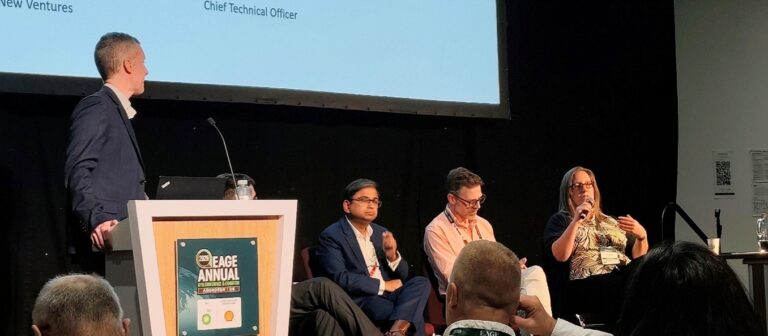
Against this backdrop, the Global CemCCUS Conference and Exhibition series aims to bring industry stakeholders together to discuss challenges, share solutions and highlight emerging best practices. The 3rd edition of the conference was held in Hamburg, Germany, from 9 to 10 June 2026, bringing together around 100 delegates from 23 countries and convening key stakeholders from across the cement and CCUS value chain. This deep dive into cement decarbonisation followed the first two editions of the event, held in Oslo, Norway, in 2024, and Vienna, Austria, in 2025. Together, the series is helping to build a more focused conversation around what it will actually take to decarbonise cement.
With 11 speakers across the two days, discussions covered a broad spectrum of practical themes shaping cement decarbonisation, including capture technologies, CO₂ transport and storage, procurement, project delivery and plant integration.
The presentation slides from the conference can be accessed here: https://bit.ly/4dOnKmU?r=qr.
Congratulations to the presenters who received the favourite presentation awards, as voted by delegates. In fourth place was Sven Fürstenburg of BASF for his paper on low emission amine carbon capture. Third place went to Merten Becker of Heidelberg Materials for his presentation on the challenges of transportation and storage. Second place went to David Jayanth and Moritz Köpcke of Ramboll for their joint presentation on procurement and delivery challenges for CCS plants. The prize for best presentation went to Kristina Fleiger of VDZ for her presentation outlining the technical challenges that cement plants face when implementing CCUS.
Key messages from the conference
One of the strongest practical messages from the conference was that cement CCUS projects need to start with the site, not with the capture technology. This is an important reality check. A capture plant cannot be designed properly without first understanding the existing cement plant’s layout, available space, heat sources, utilities, access routes, permitting context, and connection to CO₂ transport and storage infrastructure.
Another important message was that permitting often asks for more detail before the project team feels ready. In other words, the regulatory process may require a level of maturity that is ahead of where the engineering team expects to be. This makes early planning essential.
The discussion also challenged the way FEED is sometimes treated. FEED should not be seen simply as a project phase. It should be understood as a commitment to deliver specific outputs that can support procurement, permitting, cost development, risk allocation and investment decisions.
Project procurement was another major theme. How a project is divided into different contract packages, is one of the biggest project decisions. It can shape supplier competition, cost, risk allocation, delivery schedule and the management of interfaces between different parts of the project. As one of the key messages highlighted, project teams should package the project before the market packages it for them.
The business case also needs to be treated as an engineering input, not just a finance appendix. Commercial agreements, transport and storage access, risk sharing and revenue assumptions can all influence the technical solution. A technically attractive capture option may not be deliverable if the wider commercial structure does not support it.
Risk allocation was another important reality check. Risk that is simply pushed to the wrong party does not disappear. It often comes back as higher cost, delay, or weaker project delivery. Cement CCUS projects therefore need deliberate and realistic risk sharing between emitters, contractors, transport and storage operators, financiers and public authorities.
Finally, the conference reinforced the importance of operability. A project should not only ask, ‘can we build this?’ It must also ask, ‘can we run this reliably over the long term?’ If operation and maintenance are not properly specified, the project risks buying a commissioning event rather than a functioning capture plant.
Field trip to Holcim’s Lägerdorf cement plant
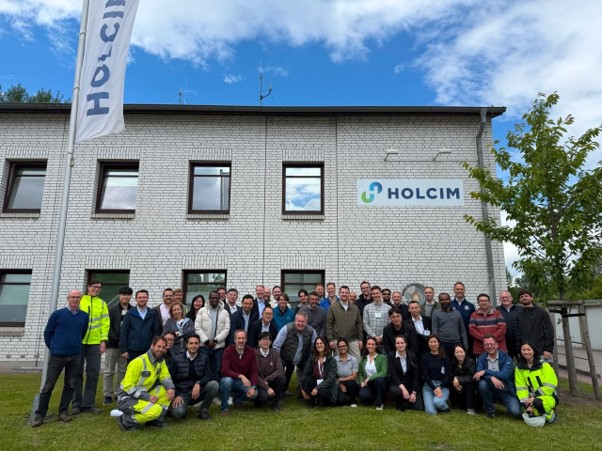
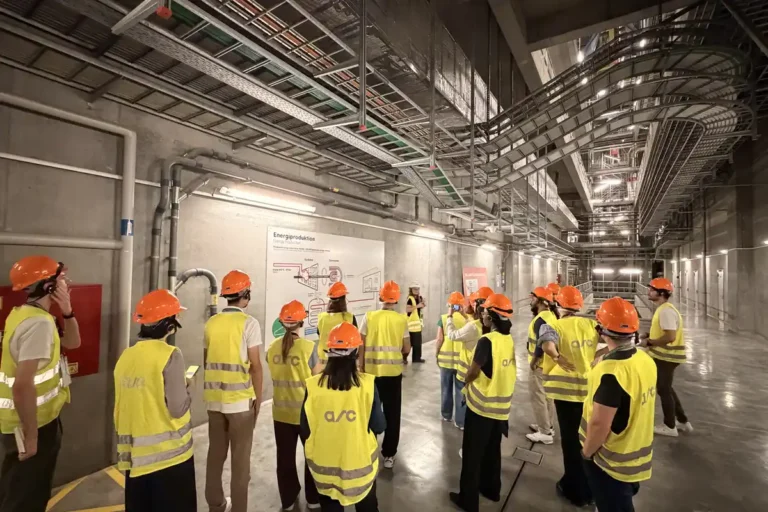
The conference was followed by a field trip on 11 June 2026 to Holcim’s Lägerdorf cement plant, the site selected for the Carbon2Business project. The project aims to transform the existing plant into one of the world’s first climate neutral cement production facilities by the end of the decade. A key feature of the planned project is the use of oxyfuel technology, where pure oxygen would be used instead of ambient air in the kiln to produce a highly concentrated CO₂ stream, making capture and downstream processing more efficient. Once operational, the project aims to capture around 1.2 million tonnes of CO₂ annually, with the target scenario being to process the captured CO₂ into a valuable raw material for the chemical industry, while storage remains part of the wider value chain. Backed by around €110 million from the EU Innovation Fund, and with total investment expected to run into several hundred million euros at the site and over €1 billion across the wider value chain, Carbon2Business Lägerdorf has also become the first German project to receive strategic project status under the EU Net Zero Industry Act.
Looking ahead
If Hamburg reinforced one message, it is that cement CCUS is moving from ambition to delivery. Brevik CCS in Norway is already operating, Padeswood CCS in the UK has reached FID, Carbon2Business at Lägerdorf is progressing as a major EU supported project, and Vicat’s Montalieu project is another important development to watch as it moves towards a planned FID. In other words, projects are beginning to come through. The challenge now is to scale and integrate full chain delivery across different industrial sites, business models and regional infrastructure settings.
The 4th Global CemCCUS Conference on carbon capture in the cement industry will take place in Lyon, France in June 2027, with a confirmed field trip to Vicat’s Montalieu cement plant and carbon capture project.
Other articles you might be interested in
Get the latest CCS news and insights
Get essential news and updates from the CCS sector and the IEAGHG by email.
Can't find what you are looking for?
Whatever you would like to know, our dedicated team of experts is here to help you. Just drop us an email and we will get back to you as soon as we can.
Contact Us Now