

A Week in Edmonton at the Hydrogen with CCS Workshop and Canadian Hydrogen Convention
News & Blogs
30 April 2026
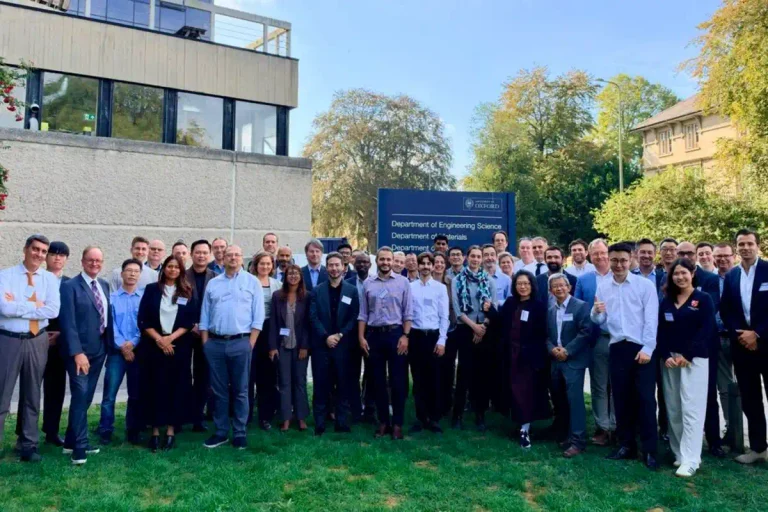
The Hydrogen with CCS Workshop co-hosted by IEAGHG, and the Canadian Hydrogen Convention, which discussed the wider Hydrogen Landscape took place in Edmonton.
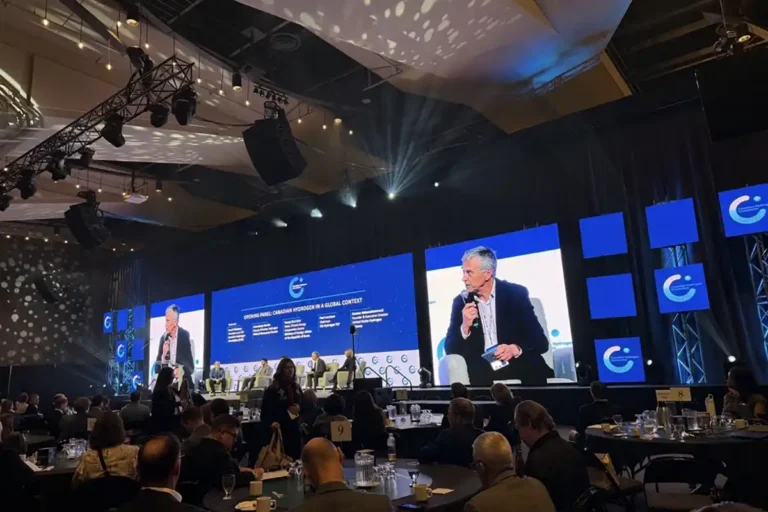
The week commencing 20 April 2026 in Edmonton, known as ‘Canada’s Festival City’, brought together two complementary perspectives on hydrogen. The Hydrogen with CCS Workshop, held on 20 April at the University of Alberta, was jointly convened by the IEA Hydrogen TCP, the Energy Pipeline Institute of Canada (EPIC), and the IEA Greenhouse Gas R&D Programme (IEAGHG), with sponsorship from Enbridge and the Pipeline Research Council International (PRCI). The workshop provided a focused technical exchange on the role of CCS-enabled hydrogen in decarbonising hard-to-abate sectors. This was followed by the Canadian Hydrogen Convention on 21 and 22 April, which placed discussions within the wider hydrogen landscape, spanning production, infrastructure, end use, and market development.
System context: beyond direct electrification
The discussions at the technical sessions across the week reinforced that the energy transition will require more than direct electricity alone. While electrification will dominate in several sectors, its limitations are evident in high-temperature industrial processes, long-distance transport, and large-scale energy storage. In these contexts, low-emission molecules are required.
Hydrogen, particularly when produced with CCS, offers a scalable pathway for supplying low-emissions molecules to sectors where direct electrification is challenging. Its value lies not in competing with electrification, but in complementing it within a whole-energy-system framework.
CCS enabled hydrogen: from technical feasibility to system integration
The workshop reinforced that CCS enabled hydrogen is moving beyond technical feasibility towards the challenge of system integration. Deployment will depend not only on hydrogen production capacity, but also on the timely development of CO₂ transport and storage infrastructure, hydrogen transport and storage networks, credible end use demand, and market frameworks that can support investment across the full value chain.
The workshop also strongly underscored the role of policy as a facilitating mechanism. Stable and supportive policy frameworks are essential to reduce investment risk, support early project development, and enable coordination across hydrogen production, CO₂ transport, and storage infrastructure. Policy is therefore not peripheral to deployment; it is a key enabler for moving CCS enabled hydrogen from technical feasibility to commercial scale implementation.
This underscores the importance of a whole chain perspective, where capture, transport, storage, hydrogen production, and enabling policy frameworks are assessed as part of an integrated system.
An additional point of discussion was the positioning of technologies at intermediate technology readiness levels. There was a clear concern that solutions approaching commercial readiness risk being deprioritised in favour of more established options. The workshop emphasised the need to maintain a balanced portfolio approach and to remain open to emerging technologies, recognising that sustained innovation alongside deployment is essential for long term system optimisation.
Expanding the hydrogen landscape: emerging production pathways
Alongside established pathways such as electrolysis and steam methane reforming or autothermal reforming with CCS, there is notable and increasing RD&D interest in alternative hydrogen production routes as follows:
One example is methane pyrolysis, a thermochemical process that produces hydrogen and solid carbon rather than CO₂. This offers the potential to avoid direct process CO₂ emissions, although it also introduces important system considerations. These include the source of heat required to drive the process, reactor design, process efficiency, and the management or utilisation of the solid carbon byproduct.
Natural hydrogen is another area attracting growing interest. It is generated through geological processes such as water radiolysis and serpentinisation. In ultramafic systems, water rock interactions can produce hydrogen, positioning the subsurface as a potential natural generation source. However, key uncertainties remain around the scale of the resource, accessibility, production methods, and the extent to which natural hydrogen can be developed as a reliable energy source.
Engineered mineral hydrogen, also referred to as stimulated geologic hydrogen, builds on similar geochemical principles but seeks to accelerate or stimulate hydrogen generation. This typically involves injecting water into iron-rich ultramafic or mafic formations to promote water rock reactions, including serpentinisation, that can generate hydrogen.
Closing reflection: value chain delivery matters
The key takeaway from Edmonton is that hydrogen deployment is not only about advancing individual production technologies, but about building the systems that connect them to infrastructure, markets and end users. While this is already well recognised across energy transition discussions, the message from Edmonton was that delivery now needs to catch up with ambition. Across hydrogen with CCS and the wider hydrogen landscape, progress will depend on turning established principles into coordinated action across production pathways, transport and storage infrastructure, credible demand, market development, and supportive policy frameworks.
Other articles you might be interested in


Get the latest CCS news and insights
Get essential news and updates from the CCS sector and the IEAGHG by email.
Can't find what you are looking for?
Whatever you would like to know, our dedicated team of experts is here to help you. Just drop us an email and we will get back to you as soon as we can.
Contact Us Now