

Hydrogen for Iron and Steelmaking: Highlights from the IEA Hydrogen TCP Task 52 Oxford Workshop
News & Blogs
1 October 2026
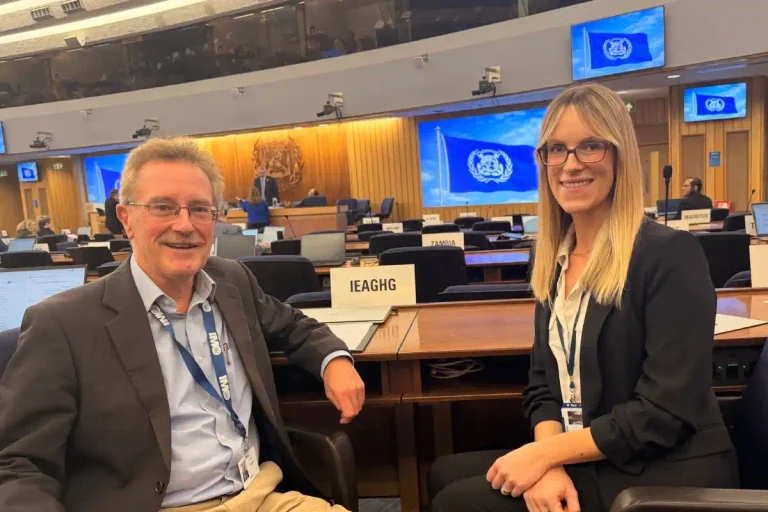
On 25 Sep 2026, IEAGHG joined an invite-only IEA Hydrogen Technology Collaboration Programme workshop at Oxford University.
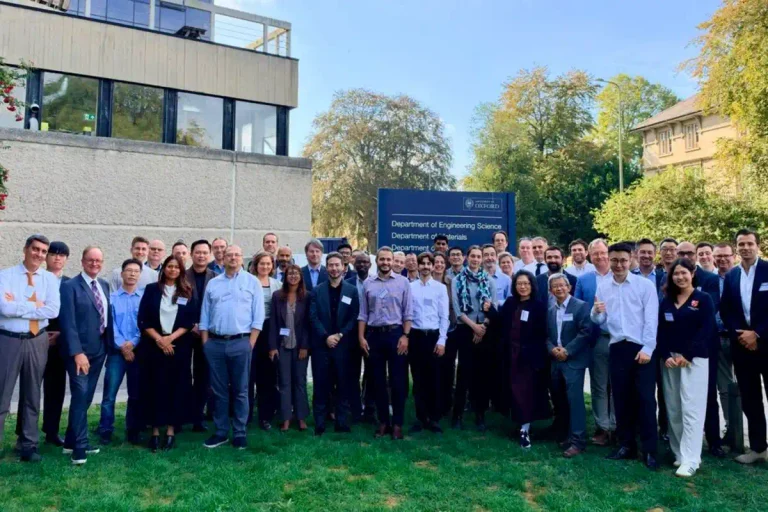
On 25 September 2026, IEAGHG participated in an invite-only IEA Hydrogen Technology Collaboration Programme (TCP) Task 52 workshop at the University of Oxford, focused on the economic competitiveness of hydrogen-based iron and steelmaking.
Task 52 is an international collaboration (100+ experts from around 20 countries) tracking technologies, resources, supply chains and future pathways for hydrogen-based iron and steelmaking across three tasks: technology assessment and readiness; supply chains and infrastructure; and global transformation pathways, competitiveness, and power systems.
Mapping the transition
The opening session of the workshop highlighted a preview of the Global Steel Transition Map, intended to provide a global asset-level view of how iron and steel production is evolving towards lower-emission pathways. The opening session also featured discussion of key messages from the earlier Task 52 Melbourne workshop, including that ‘finance follows offtake’: securing buyers is critical to project bankability. Only around 15 Direct Reduced Iron (DRI) or Hot Briquetted Iron (HBI) projects worldwide had reached Final Investment Decision (FID), with none being both merchant and fully green. This highlights the challenge of moving projects from the development pipeline to committed investment, and the importance of credible offtake in reducing market risk and supporting financing.
The industry perspective was provided by Stegra, which is developing Europe’s first greenfield steel mill in 50 years in Boden, northern Sweden. The integrated project combines renewable electricity, a 700 MW alkaline-water electrolysis facility, hydrogen-based direct reduction and electric steelmaking. The hydrogen facility is expected to produce more than 100,000 tonnes of green hydrogen annually, while Stegra aims to produce 5 million tonnes of green steel per year by 2030, with up to 95% lower CO₂ emissions compared with traditional steelmaking.
The workshop also included evidence briefing on technology readiness, costs and transformation pathways. The briefing highlighted Steel-IQ, an open-source modelling framework designed to help stakeholders explore and evaluate pathways towards a lower-carbon and competitive global steel industry. A technical spotlight on Electric Arc Furnace (EAF)-based steelmaking was also provided by the University of Warwick and IGNITE – Indigenous Green-steel for Net-zero Innovation, Technology & Enterprise, highlighting ongoing research on sustainable and circular steelmaking.
Panel discussions
The workshop was structured around four panel discussions:
- Panel 1 – Technology Readiness and Process Integration
Contributors: World Steel, Calix, Danieli, Primetals, SMS Group and Midrex. - Panel 2 – Global Value Chains, Bankability and Resources
Contributors: Lund University, Fortescue, Vale, FerroSilva, thyssenkrupp Steel and Stegra. - Panel 3 – Enabling Projects: Supply Chains, Infrastructure and Policy Support
Contributors: DIW Berlin, Organisation for Economic Co-operation and Development (OECD), Mission Possible Partnership (MPP), CRU, Tsinghua University and the University of Sheffield. - Panel 4 – Enabling Markets: Emissions Accounting, Procurement, Standards and Certification
Contributors: IEAGHG, Climate Club, ResponsibleSteel, Green Hydrogen Organisation (GH2), United Nations Industrial Development Organization (UNIDO) and the International Energy Agency (IEA)
IEAGHG’s Remarks on the Task 52 Oxford Workshop
Task 52 is timely and relevant in integrating evidence on technology readiness, resource availability, supply chains, competitiveness and transformation pathways to assess where and how hydrogen-based steelmaking can scale.
While the Task 52 workshop focused specifically on hydrogen-based iron and steelmaking, IEAGHG’s 2024 Clean Steel study assessed a broader portfolio of decarbonisation pathways, including hydrogen-based routes alongside CCS, bioenergy and natural-gas DRI options. The study comparatively assessed steelmaking pathways for the cost-effective decarbonisation of a steel mill, while considering the life-cycle environmental impacts of each route.
Against this broader decarbonisation context, a key requirement for wider deployment is the development of a credible market for lower-emission steel. Trust, transparency and confidence in emissions performance will be essential, supported by robust standards, certification and emissions-accounting frameworks that enable producers to demonstrate, and buyers to differentiate between, the emissions intensity of competing steel products.
Consistent system boundaries are particularly important. Emissions can shift between the steelmaking facility and upstream electricity, hydrogen and raw-material supply chains, meaning that apparently low-emission production routes are not necessarily comparable unless emissions are assessed on a consistent basis.
Ultimately, a credible market for lower-emission steel will depend not only on producing steel differently, but on ensuring that its emissions performance can be measured consistently, verified credibly, communicated transparently and recognised by buyers.
Closing Thoughts
Drawing both from the workshop and IEAGHG’s wider work on industrial decarbonisation, hydrogen-based iron and steel production will form part of a broader portfolio of technologies that includes electrification, CCS, bioenergy and other process configurations, with their relative roles shaped by local energy systems, infrastructure, resource availability and economics.
Next Meeting: China 2027
The next IEA Hydrogen TCP Task 52 workshop is scheduled to take place in China in the second quarter of 2027. It will continue the Task’s broader effort to strengthen collective understanding of the technology readiness, competitiveness, market outlook and transformation pathways for hydrogen-based iron and steelmaking. As projects move from demonstration towards deployment, Task 52 will remain an important international platform for bringing together evidence on technologies, resources, supply chains and enabling conditions, and for identifying the challenges that must be addressed to de-risk investment and support hydrogen-based steelmaking at scale.
Other articles you might be interested in

Get the latest CCS news and insights
Get essential news and updates from the CCS sector and the IEAGHG by email.
Can't find what you are looking for?
Whatever you would like to know, our dedicated team of experts is here to help you. Just drop us an email and we will get back to you as soon as we can.
Contact Us Now