

COP31, Antalya – The longest-ever COP and failing at the end.
News & Blogs
23 November 2026
COP31 took place in Antalya, Turkiye, from 9 to 22 November. It was unique in having a shared Presidency between Turkiye and Australia
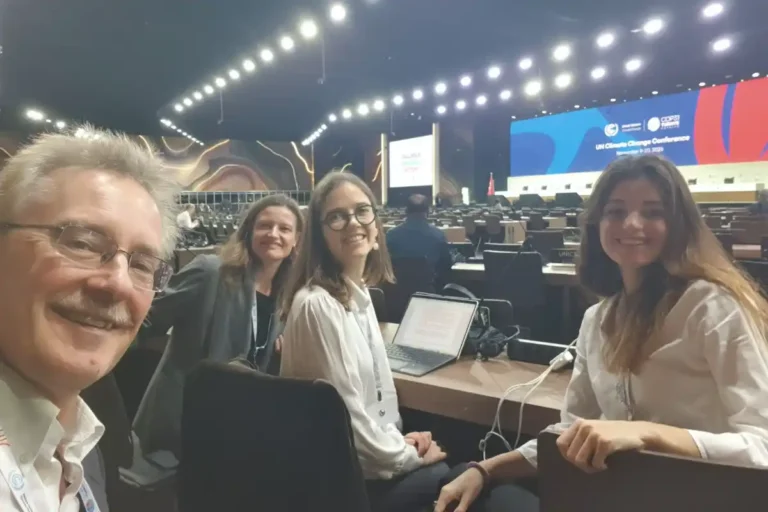
COP31 took place in Antalya, Turkiye, from 9 to 22 November. It was unique in having a shared Presidency between Turkiye, who physically hosted, and Australia, who wanted to host in Adelaide but instead compromised to lead on the negotiations.
This was heralded as the ‘Electrification’ COP, with much pre-COP messaging on targets to achieve 35% energy from electrification by 2035. Also, this COP was to start the second Global Stocktake process to report at COP33 in 2028, to continue the Mitigation Work Programme from its ending at this COP, and to renew the mandate and host for the Technology Mechanism’s Climate Technology Centre and Network.
What was not expected at this COP was a higher-than-usual profile for CCS and CDR technologies. This came about from the start of the COP partly because of UNEP’s recently published 1.5 Overshoot report, stating that we will miss limiting warming to 1.5°C and that to return to 1.5°C we will need a lot of permanent removals. Also, the IPCC has the Methodology report on CDR and CCUS underway, which was widely referred to (honoured to be a lead author).
Then on top of these, CCUS and CDR technologies got introduced in the ‘Cover Decision’ (the overarching high-level conclusions of a COP) at an early stage, with numerical targets for 2035. However, this was seen by many Parties and NGOs as being motivated by climate politics, even though the target numbers were reasonable and drawn from IEA figures. The 2nd and 3rd drafts of the Cover Decision retained the CCUS and CDR aspects, softening the numerical targets to ‘gigatonne scale’ per annum by 2035, which is similar to the Carbon Management Challenge’s ambition of a gigatonne in operation or development by 2030, and equivalent to the annual emissions of the cement sector. So this should not have been controversial. However, some environmental NGOs saw this as greenwashing.
Of note was the high-level support for CCUS and CDR technologies, including from the Australian COP31 President Chris Bowen, who said in a media interview, justifying their inclusion in the Cover Decision, that “both the IPCC and IEA have said we are going to need CCUS as part of the net zero 1.5 scenario”. There was also a lot of interest in the side events on these topics, including ours (see links below) and the IPCC’s.
Another hot topic at this COP was the IPCC Parties’ delay, at their last plenary meeting, in reaching agreement on delivering AR7 in time to inform the second Global Stocktake in 2028, as was originally intended; some countries had been pushing back on this in the IPCC.
The electrification goals were retained in the 3rd and final draft version of the Cover Decision, as were references to ‘Overshoot’ and to the IPCC delivering in time for the second Global Stocktake, but some Parties were not happy that there was no explicit mention of transitioning away from fossil fuels, despite a reference to the COP28 UAE Consensus, which did include that. In the intensive lobbying by some environmental NGOs on this fossil fuels issue, there was misinformation and disinformation on CCS, which went against the IPCC science and IEA Net Zero scenarios, and some of their messaging was picked up by the media and also by some developing country Parties and repeated in their positions on the Cover Decision. The result of all of this was that the closing Plenary ran over into Saturday and then over into Sunday, and the number of Objections to the Cover Decision, including by the EU and Least Developed Countries, meant that it could not be adopted. Notably, the African Group of countries and India were prepared to accept the Cover Decision, so there was a division between developing countries. This also meant that this COP became the longest one ever, ending late Sunday evening.
When I read the 90 paragraphs of the 3rd draft Cover Decision (down from 144 in the 1st draft), there is very much good in there, including the electrification goals being retained and, in the context of clean energy, on climate finance and adaptation, and on the IPCC AR7 delivering for the second Global Stocktake in 2028. So I wonder if this was a case of the ‘perfect being the enemy of the good’?
A few things were adopted at COP31, including agreement for the CTCN to continue to be hosted by UNEP and with an increased budget. In the COP response to the review of the CTCN’s third phase, it was a surprise that CCUS and CDR technologies were mentioned there for increased support.
In parallel, and not formally part of the UNFCCC process, was a roadmap on transitioning away from fossil fuels. This was an outcome of the failure at COP30 in Belém to agree on such a roadmap, and the COP30 Presidency, Brazil, volunteered to lead a sub-group of countries to develop such a roadmap, and this was presented at COP31 to gather support from more countries. This roadmap is known as Transitioning Away from Fossil Fuels in Energy Systems (TAFF) and is intended to inform countries and assist them in developing their own national roadmaps. It has the support of 30+ countries. The TAFF includes the use of CCS for the coal power sector, hard-to-abate sectors, and the oil and gas sector, although not clearly for the power from gas sector.
In conclusion, after an unexpectedly high profile for CCUS and CDR at this COP, the overall COP result was disappointing for climate action and also for climate science. Can this be recovered in time for the second Global Stocktake in 2028? The next COP moves to Africa, and the pressure will be on Ethiopia as the Presidency then to try and achieve more progress.
More details on the outcomes can be found on the IISD website from the 24th November: Inside COP 31 | International Institute for Sustainable Development
The articles on our UNFCCC side event are available from IISD at https://enb.iisd.org/how-can-ccs-help-addressing-requirements-cbam-turkiye-cop31 and from the Carbon Herald at https://carbonherald.com/cop31-carbon-capture-emerges-as-a-strategic-tool-for-exporters-facing-eu-carbon-border-tariffs/.
Other articles you might be interested in




Get the latest CCS news and insights
Get essential news and updates from the CCS sector and the IEAGHG by email.
Can't find what you are looking for?
Whatever you would like to know, our dedicated team of experts is here to help you. Just drop us an email and we will get back to you as soon as we can.
Contact Us Now