

Momentum Building for CCS: Highlights from the 2026 Global GCCSI Europe Forum
News & Blogs
6 March 2026
The agenda offered a thoughtful look at CCS developments across the Mediterranean.
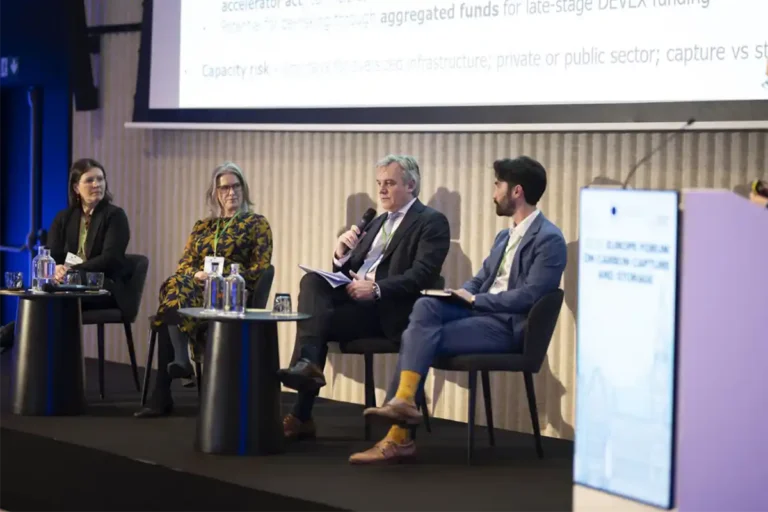
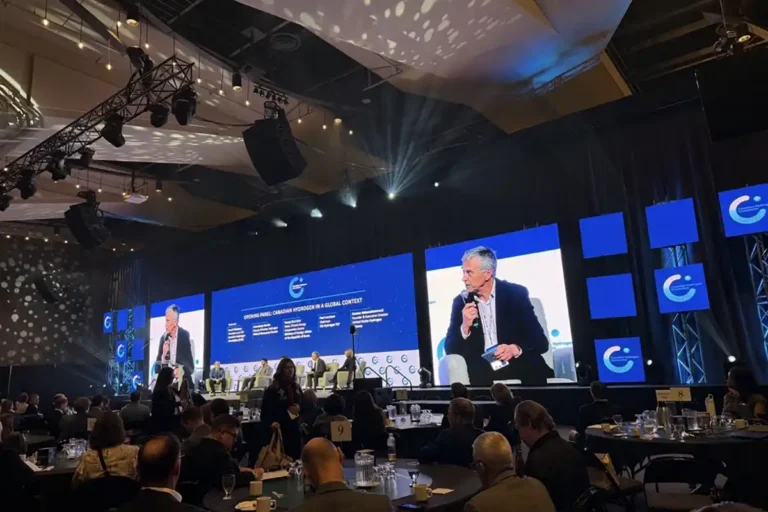
The Global Carbon Capture and Storage Institute (GCCSI) held its European Forum on Wednesday 4th March, in Brussels.
Richard Leese (Head of Europe, Global CCS Institute) and Jarad Daniels (CEO, Global CCS Institute) opened the event to over 200 delegates, with a warm welcome and a comprehensive global status update. The Institute’s ongoing work tracking project development, policy evolution, and regulatory shifts continues to provide valuable insight into worldwide momentum. When paired with data from the London Register of Subsurface CO₂ Storage, the picture is one of steady progress—projects are advancing, lessons are emerging, and we’re beginning to see which policy and financial tools truly support deployment.
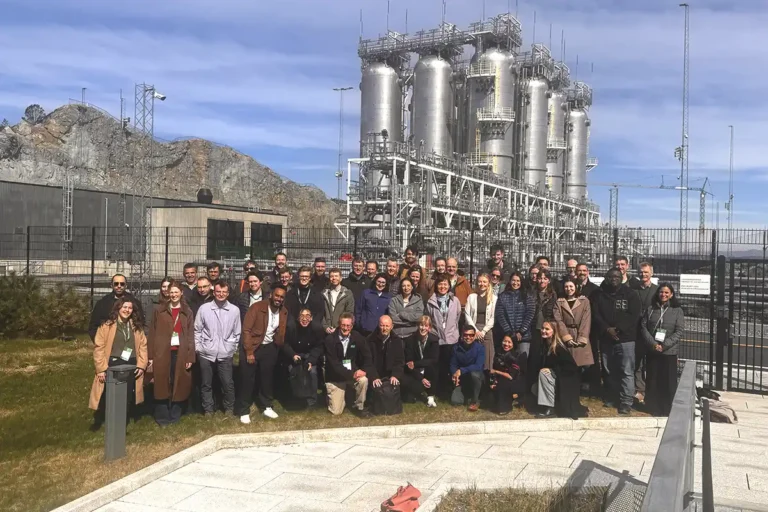
The agenda offered a thoughtful look at CCS developments across the Mediterranean. Projects such as Prinos and Ravenna are moving forward with storage permits and test injections, with early indications suggesting strong—even oversubscribed—demand among potential customers. However, progress across the region remains uneven: Spain’s challenges in bringing storage projects to maturity may slow the development of capture projects there. France also noted that, for many emitters, Mediterranean storage may ultimately be a more viable route than relying solely on North Sea reservoirs.
Country updates from the UK (Dr Michael Brown, DESNZ) and the Netherlands (Lies van Kessel, Ministry of Climate Policy and Green Growth) highlighted both achievements to date and ambitions yet to come. A fireside chat with Ian Havercroft (Global CCS Institute) and Luc Haustermans (Yara) offered a compelling case study: a major emitter that had already maximised internal decarbonisation options and turned to CCS as the next logical and commercially sound step. Yara’s involvement with Northern Lights underscores both environmental commitment and the growing relevance of CBAM in market dynamics.
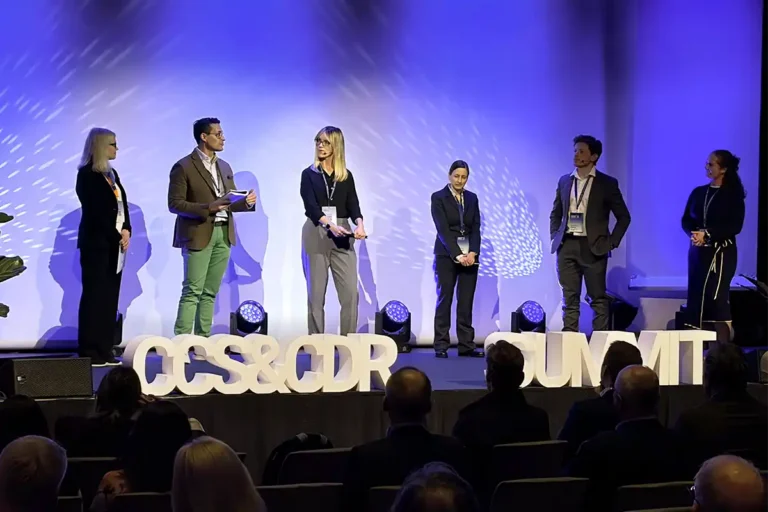
Financing was a central theme throughout the day. A panel chaired by Angus Gillespie (Global CCS Institute) and a later presentation from Chris Thackerey (Baringa) explored ways to unlock capital for projects struggling to reach FID. Angus opened by observing that even the Financial Times now recognises that CCS is gaining meaningful traction. Vanessa Lowe (Santander) shared that the bank has financed four recent CCS projects totalling $1 billion, noting that strong government support—particularly in managing cross-chain risks—has been critical. Similar themes were echoed by Anastasia Tomasidou (Bloomberg) relating to Porthos (Netherlands) and HyNet (UK), and by Fabienne Moimaux (BNP Paribas CIB), who reflected on how lessons from cancelled UK projects 15 years ago ultimately paved the way for more robust, financeable models today.
The panel’s wish list for accelerating CCS included: clear business models backed by government, access to pre-FID capital, cross-border collaboration and CO₂ specifications, and a transparent understanding of cross-chain risks for all parties.
Nicola Clarke (IEAGHG), together with Simon Helm (DNV) and Richard Leese, co-facilitated a breakout session on CO₂ transport—an often overlooked but critical link in the CCUS value chain. The timing was ideal, with the EU’s forthcoming legislative initiative on CO₂ transport infrastructure and markets expected in Q3 2026, and the UK Government consulting on non-pipeline transport options. Discussion centred on CO₂ specifications, the importance of flexibility and redundancy in future networks, and the need for clarity around risk attribution across multiple stakeholders. Participants also drew parallels with analogous sectors such as LNG, electricity grids and broader energy infrastructure, recognising opportunities to apply existing lessons.
The GCCSI Europe Forum closed with feedback from the four breakout groups—Financing Mechanisms, International Policy and Tracking, Sub-regional Collaboration, and CO₂ Transport—followed by closing remarks from Richard Leese and Jarad Daniels. Delegates then gathered for an evening reception hosted by JOGMEC.
The Global CCS Institute and sponsors, Carbon Clean and JOGMEC, deserve thanks for an excellent programme and valuable networking opportunities for the 200–300 participants.
Other articles you might be interested in
Get the latest CCS news and insights
Get essential news and updates from the CCS sector and the IEAGHG by email.
Can't find what you are looking for?
Whatever you would like to know, our dedicated team of experts is here to help you. Just drop us an email and we will get back to you as soon as we can.
Contact Us Now