

Summer School Site Visits to ARC and Ørsted
News & Blogs
14 July 2026
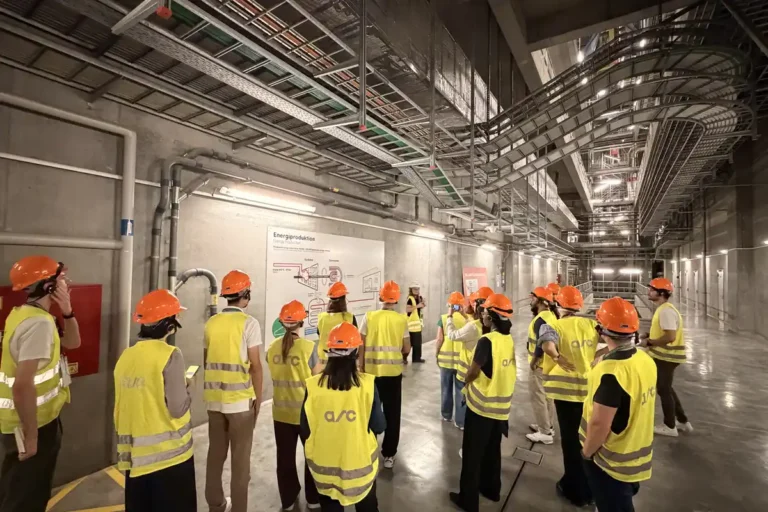
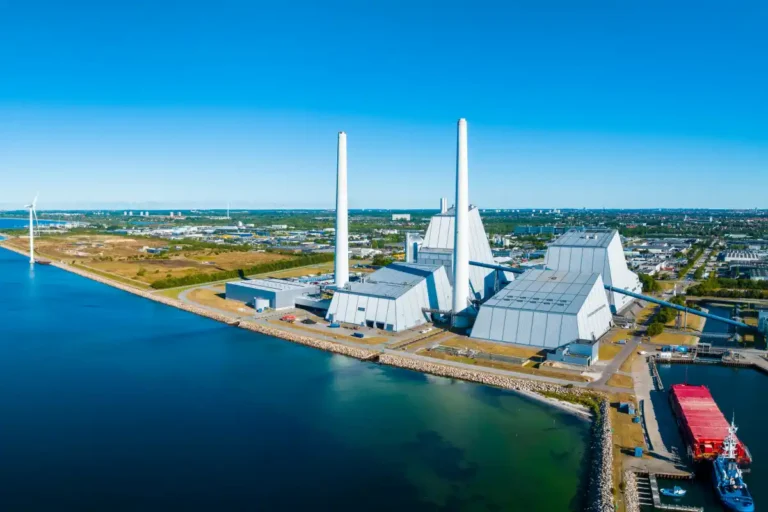
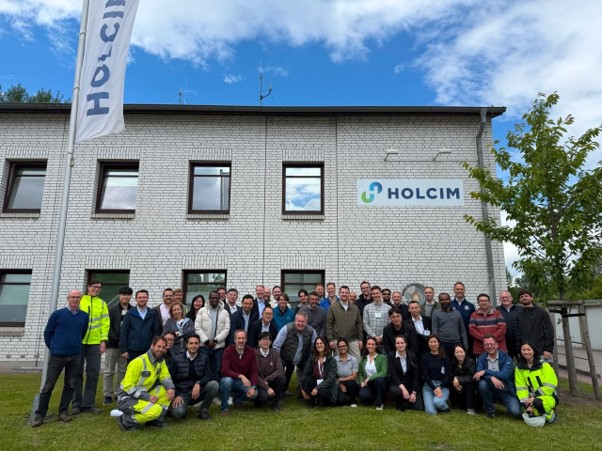
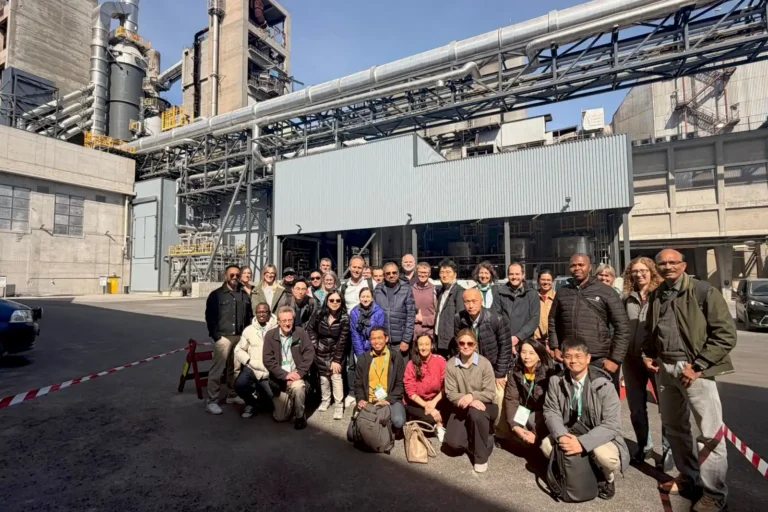
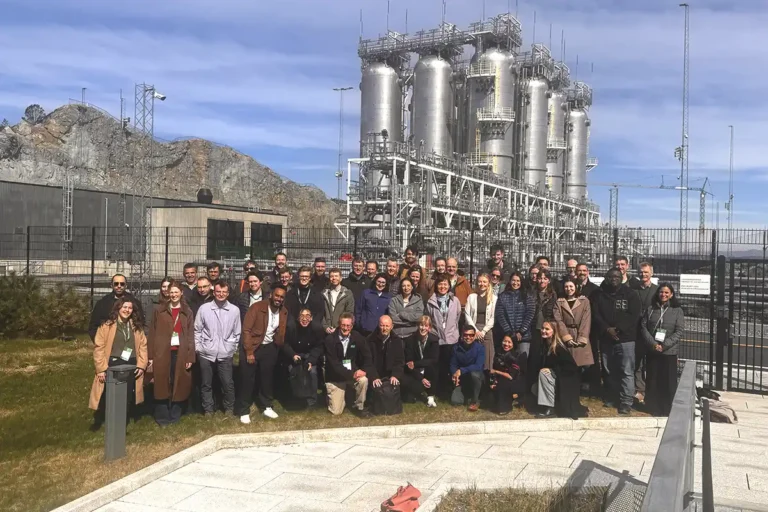
As part of the IEAGHG International CCS Summer School, we recently visited ARC’s Amager Bakke waste-to-energy plant in Copenhagen and the Ørsted Kalundborg CO₂ Hub.
Summer School Site Visits to ARC and Ørsted
There is something quite different about discussing CCS while standing next to the equipment. There is something stranger still about learning that, for accounting purposes, a tonne of biogenic CO₂ can become fossil for the length of a truck journey and biogenic again on arrival.
As part of the IEAGHG International CCS Summer School, we recently visited ARC’s Amager Bakke waste-to-energy plant in Copenhagen and the Ørsted Kalundborg CO₂ Hub. The visits gave us several moments that made the practical reality of CCS feel very different from the neat value-chain diagrams we are used to seeing.
At ARC, the starting point is waste.
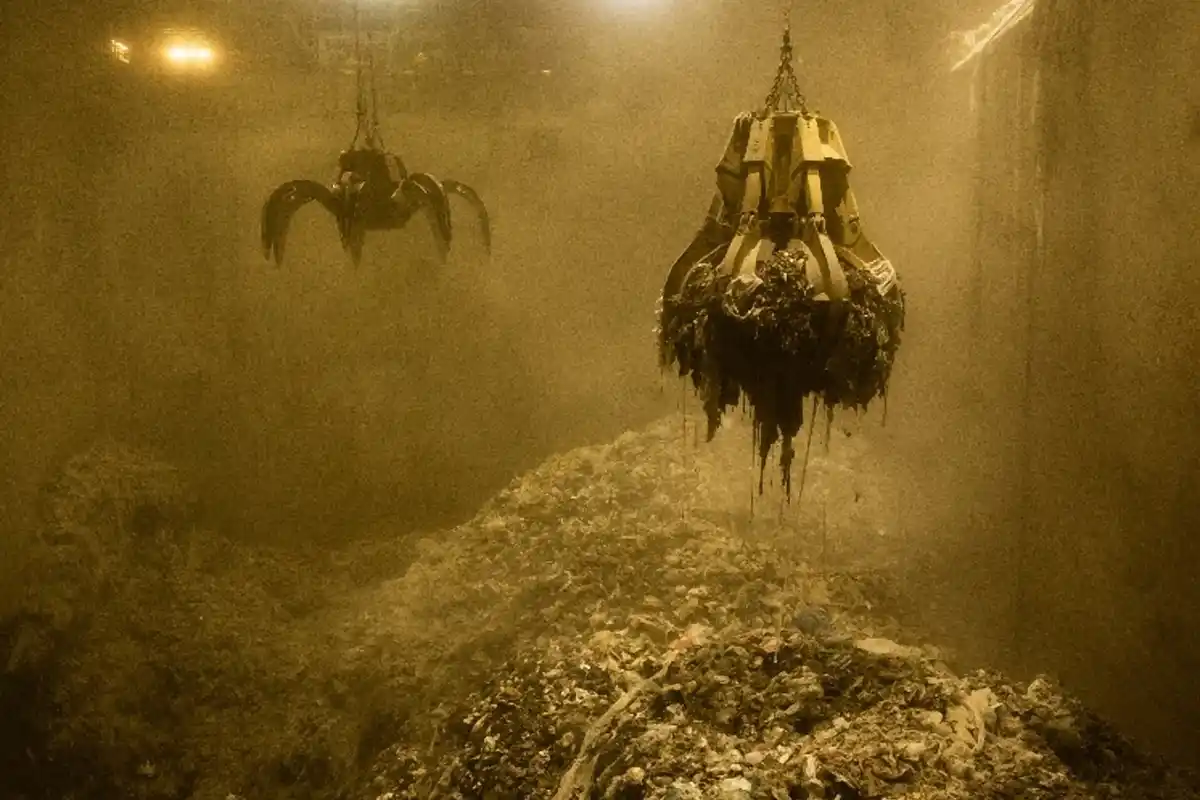
Each Dane produces around 787 kg of municipal waste every year. ARC’s wider system handles waste from around 850,000 people and approximately 600,000 tonnes of waste annually. Prevention, reuse and recycling sit above energy recovery in the waste hierarchy, but residual waste still remains and needs to be treated.
The associated CO₂ emissions are significant. ARC’s presentation showed around 500,000 tonnes of CO₂ emissions annually, split between fossil and biogenic CO₂. Its fossil emissions alone account for around 13% of Copenhagen’s fossil CO₂ emissions.
ARC has therefore spent several years testing carbon capture in practice. A pilot campaign was followed by a larger demonstration unit designed for stable operation and 90–95% CO₂ capture.
The technical work also showed how much optimisation sits behind the simple phrase “capture CO₂”. Different process configurations were tested, including absorber intercooling and alternative approaches to heat integration. Campaigns using an MEA base case and the CESAR solvent examined energy demand, solvent stability and emissions, while the captured CO₂ was compressed, dried, cooled and liquefied.
Standing inside the plant, it becomes obvious that carbon capture is not simply a box added to a flue-gas stream.
Heat that was previously available for district heating may now be needed by the capture process. Electricity demand changes. Cooling matters. Space matters. ARC’s own comparison of the plant with and without carbon capture shows how quickly the capture system becomes entangled with the wider energy system.
The visit to Ørsted’s Kalundborg CO₂ Hub took that idea much further.
The project brings together two biogenic CO₂ sources: the woodchip-fired Asnæs Power Station and the straw-fired Avedøre Power Station. Together, they are contracted to deliver around 430,000 tonnes of CO₂ annually. Five modular capture units will capture the CO₂ before it is compressed, liquefied and moved into intermediate storage.
But the most striking part of the project is what happens after capture.
Around 150,000 tonnes of CO₂ per year will travel roughly 100 km from Avedøre to Asnæs by road. Each trailer carries about 34 tonnes of CO₂. Up to eight trucks will operate continuously, making an estimated 14–17 round trips each day. At Asnæs, the CO₂ joins the hub’s intermediate storage system before being loaded onto ships for transport to Northern Lights and permanent geological storage in Norway.
Those numbers do more than describe a transport system. They show how quickly CCS becomes a logistics operation.
Capture units operate continuously. Trucks have loading times and journey times. Storage tanks have finite capacity. Ships arrive according to their own schedules. Northern Lights’ vessels can transport 7,200 tonnes of CO₂ per trip, with a round trip from Asnæs taking around five to six days.
The arrows between capture, transport and storage suddenly become very busy places.
Some of the most interesting discussions during the visit were about exactly those interfaces.
One question concerned the accounting treatment of biogenic CO₂ as it moves through the transport chain. The explanation given during the visit was striking: CO₂ captured at the plant is accounted for as biogenic, but during road transport it is treated as fossil CO₂ under the relevant accounting framework. Any leakage during transport therefore carries an associated emissions liability, before the CO₂ is again accounted for as biogenic once received into the hub’s storage system.
Another discussion concerned the energy consumed by the CCS facility itself.
A power plant may use internally generated energy for its own operation without that energy necessarily being treated in the same way as an external commercial activity. But what happens when that energy is used for CCS? If carbon capture increasingly becomes a business in its own right, should the energy used by the capture plant be treated differently for tax purposes?
The answer, at least for now, is not entirely straightforward.
These may sound like accounting or tax questions rather than CCS questions. But once hundreds of thousands of tonnes of CO₂ begin moving between capture facilities, trucks, tanks, ships and storage operators, the boundaries between engineering, logistics, regulation and commercial responsibility become increasingly difficult to separate.
That, for me, was the clearest lesson from the two visits.
At ARC, the challenge is integrating capture into a complex industrial facility. At Kalundborg, the challenge has already expanded into aggregation, road transport, intermediate storage, shipping and permanent storage.
For years, CCS has often been illustrated as three boxes: capture, transport and storage.
In Denmark, those boxes are starting to become an operating system.
And as they do, some of the most important lessons may be found in the spaces between them.
Other articles you might be interested in
Get the latest CCS news and insights
Get essential news and updates from the CCS sector and the IEAGHG by email.
Can't find what you are looking for?
Whatever you would like to know, our dedicated team of experts is here to help you. Just drop us an email and we will get back to you as soon as we can.
Contact Us Now