

COP31, Antalya – A Busy COP for IEAGHG!
News & Blogs
24 November 2026
COP31 took place in Antalya, Türkiye, from 9 to 22 November. What was not expected at this COP was a higher-than-usual profile for CCS and CDR technologies. This came about from the start of the COP partly because of the UNEP’s recently published 1.5 Overshoot report, stating that we will miss limiting warming to 1.5°C and that, to return to 1.5°C, we will need a lot of permanent removals. Also, the IPCC has its Methodology Report on CDR and CCUS underway (I am honoured to be a Lead Author), which was referred to often at COP (and is out for Expert Review at the moment).
Then on top of these, CCUS and CDR technologies were introduced in the ‘Cover Decision’ (the overarching high-level conclusions of a COP) at an early stage (see my previous blog). This meant that there was much interest in CCS and CDR technologies, and all relevant events were well attended.
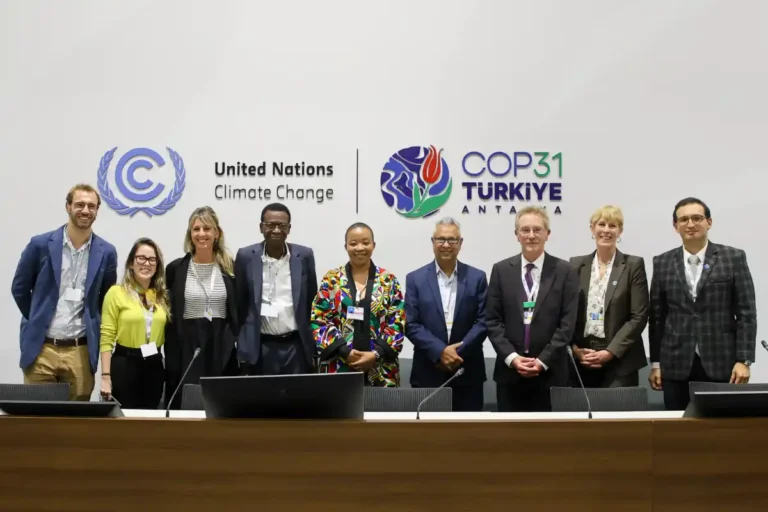
Our priority activity was leading the co-organisation of a UNFCCC side event titled “How can CCS help in addressing the requirements of CBAM initiatives, including for Türkiye?” This was co-organised with The University of Texas and partnered with CCSA, Bellona, and the International CCS Knowledge Centre. This side event took place on Friday 13th from 6:30pm to 8:00pm. COP31 had identified Accelerating the Clean Energy Transition and Supporting Low Carbon Industrialisation as priority areas. CCS supports both of these while helping countries meet the EU’s Carbon Border Adjustment Mechanism (CBAM) requirements. In the first part, we discussed the role of CCS and how our organisations are advancing deployment of CCS in this context. The speakers were: myself on Global Scene Setting and Moderating; Francesco Lombardi Stocchetti of Bellona on the role of CBAM in Europe; Olivia Powis of CCSA on UK CCS projects and CBAM policy; Professor Katherine Romanak of The University of Texas on National CCUS Centres of Excellence in the Global South. The second part covered how exporting countries are developing CCS to meet the challenges of CBAM, with the following speakers: Dr Yavuz Can Aslan of Kadir Has University, Istanbul, on the Impact of CBAM on industry in Türkiye and CCS developments in Türkiye; Professor Raffie Hosein and Professor Andrew Jupiter of UWI on Advancing CCUS in Trinidad and Tobago; Zamampondo Sibewu of the Council for Geoscience on CCUS developments in South Africa and relevance for CBAM; and Dr Isabela Morbach of CCS Brasil on CCUS developments in Brazil and relevance for CBAM. Much information was shared with the audience, including on CBAM, which is a hot topic in the negotiations at COP (and known under the term “Unilateral Trade Measures”). Consequently, the side event was well attended, especially for that late hour, and the good questions continued on after the official ending time, a good sign of the level of interest. As you would expect, there is a lot of interest from private sector industries in CBAM and the means to address its requirements, and this was a recurring topic in several of our events also (along with transboundary developments). The side event was nicely covered by the COP media IISD and by the Carbon Herald (links provided below), and it also helped counter some of the disinformation on CCS circulating at the COP.
I was invited to moderate and contribute to a BBVA event, “Setting up the Value Chain of CCUS at Scale”, with Tomas Garcia-Moreno of BBVA and Torbjørg Heskestad, CCUS lead at Equinor. BBVA is a bank very much involved in several CCS projects, including in the UK clusters. After marking 30 years of Sleipner (as a single source and sink CCS project), we discussed the successes and challenges of coordinating and financing the CCS value chain in today’s more complex cluster projects, with the Northern Lights JV and Northern Endurance Partnership as leading examples. In terms of financing, we also covered the EU’s CBAM (Carbon Border Adjustment Mechanism) and the new developments in insurance for CCS (see the Geneva Association’s new report “Enhancing the Insurability of Carbon Management Projects” and IEAGHG report 2026-12 “Developments in Insurance Services to Facilitate CO2 Geological Storage”). It is good to reflect on and share the learnings from these early cluster projects.
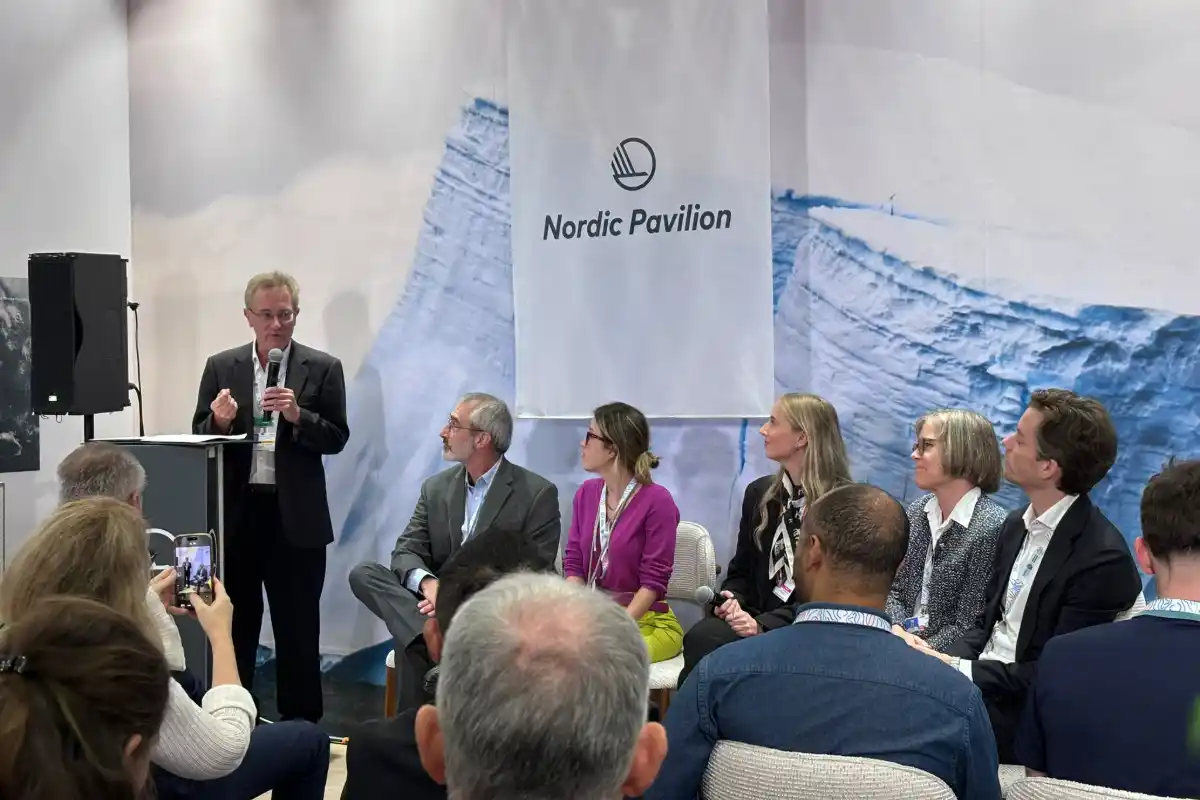
There was a nice link between the two events I spoke at on the first Wednesday in COP31. In the “Nordics as a Launchpad for Scaling Carbon Management” event, there were great contributions by Mari Sundli Tveit, Rune Volla, Winston Beck, Ane Gjengedal, Jarad Daniels, Isabela Morbach and Mona Mølnvik on the key takeaways from the success of Norway with CCS, especially moving from Sleipner to Longship and Northern Lights JV. In summary, these were enduring commitments by government, industry, and research. My wrap-up emphasised the global impact of Norway’s initiatives, including great knowledge sharing, the next CCS cement project being built at Padeswood, UK, and most importantly their lead on the export amendments to the London Protocol (which IEAGHG assisted). These enabled other countries to follow with full value chain CCS projects across international borders, notably Denmark with Greensand and potentially Japan with Malaysia, and others. So yes, the Nordics are a Launchpad for Scaling Carbon Management!
This was followed by an event in the Malaysia Pavilion, “Malaysia’s Next Growth Frontier – The Role of CCS”. Great contributions were provided by Jarad Daniels and Dr Wei-nee Chen on developments in Malaysia, including the CCUS Act 2025, the first offshore assessment permit, and ETS development. I spoke about the Paris Agreement Article 6.4 potential and the London Protocol’s role, with Japan now enabled to export CO2 to Malaysia, and the forthcoming London Convention’s Scientific Group meeting to be hosted by Malaysia in 2027 (which will have CCS on its agenda). So exciting CCS developments in Malaysia, following Norway’s lead!
Many thanks to the Global CCS Institute for organising both of these events. Both were full houses; there was great interest in these subjects at COP!
I was invited to present at the event “Enabling Cross-Border CCS” in the South Korea Pavilion. After great introductory presentations by Jinhoo Kim of the Korea CCUS Association and Jarad Daniels, there was a virtual presentation by Joo Yong Lee on the new IPCC CDR and CCUS Methodology Report, as she is a Coordinating Lead Author on it. It was very appropriate for Noora Al Amer of the Global CCS Institute and me to follow up with more information on cross-border CCS under UN perspectives. Noora covered the broader UNFCCC. I covered the London Protocol, Paris Agreement Article 6.4, and also the IPCC Inventory Guidelines 2006 and the new draft guidance on international transport of CO2 from the new draft IPCC CDR and CCUS Methodology Report, which covers international waters for the first time! There were also good presentations from Olivia Powis and Isabela Morbach on UK and Brazil perspectives. Thanks to the Global CCS Institute and the Korea CCUS Association for organising a very topical event! A full house again!
[And see IEAGHG for three relevant reports on the London Protocol CCS transboundary topic].
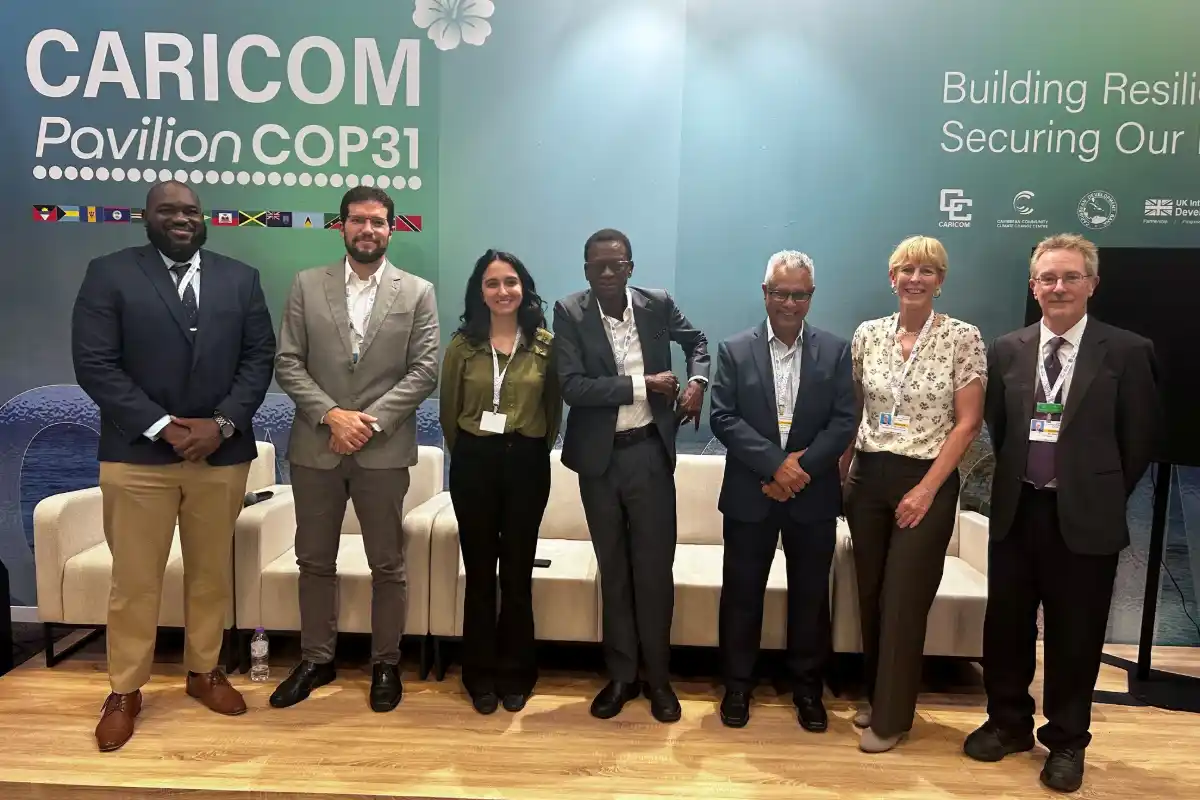
We supported the organisation of the “CCUS in the Caribbean and South America: From Vision to Implementation” event. This was organised by Professor Raffie Hosein of UWI in Trinidad and Tobago and hosted in the CARICOM Pavilion. We heard updates from Professor Raffie Hosein and Professor Andrew Jupiter on developments in Trinidad and Tobago with funding support from the Green Climate Fund, from Danielle Coimbra Moreira and Leandro Gomes de Freitas on developments with onshore CCS in São Paulo state in Brazil, from Ryan Zuniga of the Caribbean Community Climate Change Centre (CCCCC) on their funding objectives for such CCUS activities, and from Professor Katherine Romanak of The University of Texas on Advancing CCUS in emerging economies. It was an honour to provide the IEAGHG global scene-setting and to moderate. Good experiences and lessons learnt in developing CCUS in such countries were shared with an interested audience. Thank you to Professor Raffie Hosein for organising!
I was invited by the Global CCS Institute and CNPC to speak in a CCUS event in the China Pavilion organised by CNPC on developments in China and scaling CCS projects. We heard from many Chinese speakers, including from the Ministry of Ecology and Environment, CNPC, Sinopec, Peking University, and ACCA21, amongst others. It was nice to see Dr Gao of Huaneng speaking about their Longdong coal station with CCUS, which he did in plenary at our recent GHGT-18 conference, and Dr Ma Jinfeng of Northwest University (who is in the Network of National CCUS Centres of Excellence and a fellow IPCC Lead Author). International perspectives were provided by Jarad Daniels on their global update, myself on European developments (in collaboration with Carbon Management Europe), and by Brian Sullivan of IPIECA, Richard Leese of the Global CCS Institute, and Pete Harrison of Environmental Defense Fund.
The Carbon Management Challenge organised a Ministerial roundtable under the COP Presidency of Türkiye, with Ministers and Deputy Ministers from Norway, the Netherlands, Kuwait, Canada, and senior officials from Italy, Azerbaijan, Saudi Arabia, Australia, Nigeria, UAE, Germany, Venezuela, Iraq, Libya, and Pakistan. These were joined at the table by the International Chamber of Commerce, IEAGHG (myself), Bellona, The University of Texas, ADB, and CCSA, representing a broad collection of stakeholder groups and all given an opportunity to speak. Having such a Ministerial-level event sent out a good message on CCS and CDR at the COP.
We also collaborated in a booth on CCS, with The University of Texas, CCSA and the International CCS Knowledge Centre. There was constant interest in our range of information on CCS and our activities, and it was especially busy in the first two days.
There were other good CCS events at COP. The one other UNFCCC side event on CCS was organised by the Global CCS Institute with CO2GeoNet, CRIN, and CCS Brasil. This was on “From NDCs to Net Zero: Unlocking CCS Opportunities and Investment”, with Alberta Minister Grant Hunter providing the keynote.
On the one day off at COP, with no official meetings on the middle Sunday, there was a “Run4Climate” run organised by the Global Renewables Alliance and the Global Wind Energy Council. To enter and gain a climate change coloured running shirt, you had to write a climate-related pledge on their board, which was then printed onto banners. So a couple of CCS pledges were included. This 6k run along the coast was a very pleasant opportunity for networking and outreach with our renewable energy colleagues. I have always said that CCS brings people together, and so does running!
This was a busy COP for me, with eight speaking events, including co-organising the largest one on CCS, participating in the BINGO briefings each morning, running a booth for four days, and following key negotiations, including in the Closing Plenary, which overran into Sunday to make this the longest COP ever. It was also rewarding to meet several of our IEAGHG Summer School alumni at the COP with active roles and making a difference!
Many thanks to Türkiye for hosting the COP. The internal Blue Zone logistics were good and made the long working days more manageable, although the transport logistics to and from the COP struggled with the number of delegates (some 70,000 in total).
The articles on our UNFCCC Side-event are available from IISD at https://enb.iisd.org/how-can-ccs-help-addressing-requirements-cbam-turkiye-cop31 and from the Carbon Herald at https://carbonherald.com/cop31-carbon-capture-emerges-as-a-strategic-tool-for-exporters-facing-eu-carbon-border-tariffs/.
UNFCCC Side-event Group photos acknowledgements to ENB/IISD | Anastasia Rodopoulou.
Other articles you might be interested in
Get the latest CCS news and insights
Get essential news and updates from the CCS sector and the IEAGHG by email.
Can't find what you are looking for?
Whatever you would like to know, our dedicated team of experts is here to help you. Just drop us an email and we will get back to you as soon as we can.
Contact Us Now